Season / availabilityJune–August main; remontant into October; frozen year-round
Main originsTernopil, Khmelnytskyi, Volyn, Zhytomyr
Shelf lifeUp to 24 months at −18 °C
Ukrainian raspberries for IQF freezing, puree and juice. Main harvest Jun-Aug with remontant season into autumn.
Overview
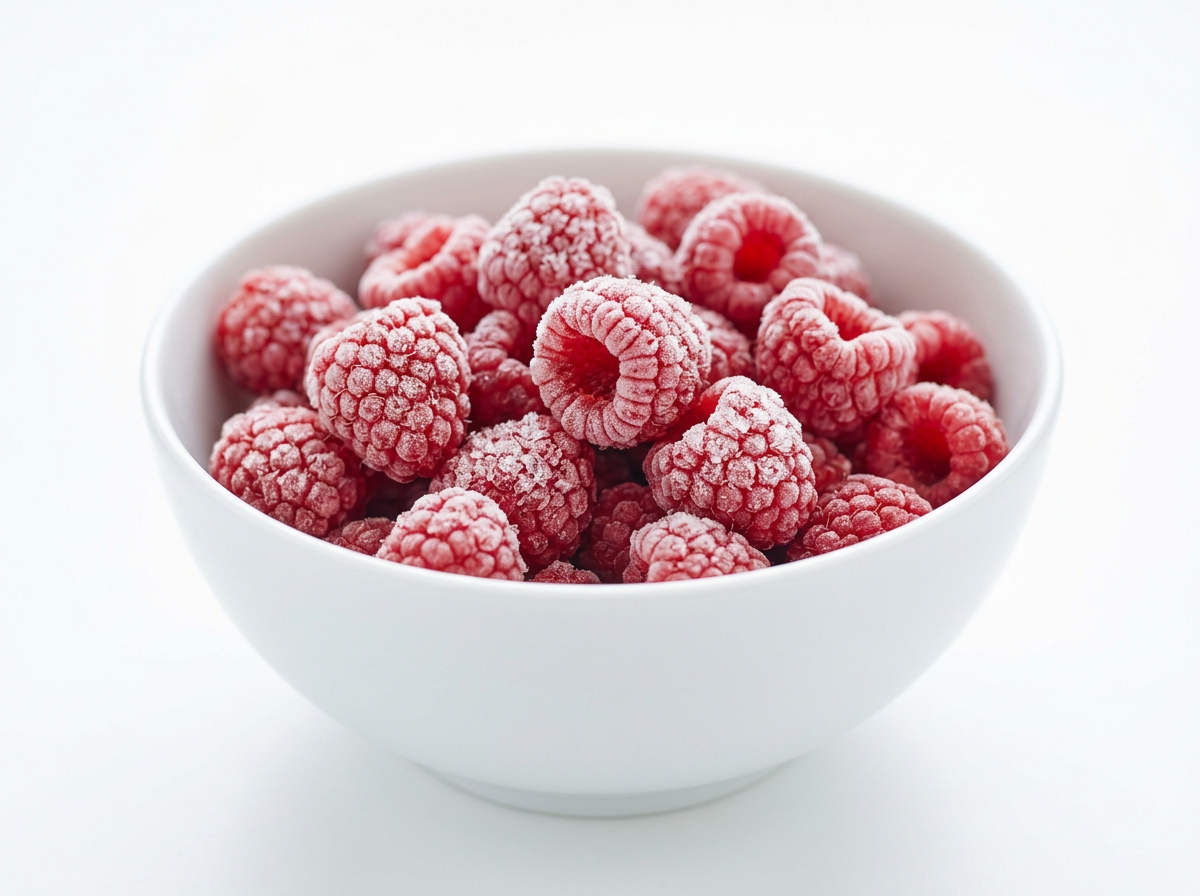
Ukraine is one of the world’s largest exporters of frozen raspberries, built on smallholder picking networks and modern IQF processing. Remontant varieties extend the season into autumn, making Ukrainian raspberry a year-round program product for EU processors and packers.
Key facts
Season / availabilityJune–August main; remontant into October; frozen year-round
Main originsTernopil, Khmelnytskyi, Volyn, Zhytomyr
Berries are chilled and IQF-frozen at −30 to −40 °C within hours of picking. Grades: whole (90/10, 80/20), whole & broken, and crumble for juice/puree. Block-frozen puree and NFC juice complete the range.
Industrial: 10–15 kg cartons with PE liner; 300–400 kg octabins for processing grades. Retail: 300 g–1 kg pouches under private label. Standard pallet: 100–120 cartons depending on format — confirm per supplier.
Quality & Grades
Critical parameters: whole-fruit share, crumbling, colour, foreign matter, MRL compliance and lot microbiology. Leading processors run HACCP systems with optical sorting and metal detection; many hold BRCGS/IFS — verify per facility and request a lot COA with residue screening.
Reefer FTL/LTL at −18 °C; 2–5 days DAP to most EU hubs. Peak-season reefer capacity tightens in July — book transport early and specify temperature loggers.
Frozen raspberry is a high-volume EU import for jam, dairy, bakery and smoothie industries. Ukraine’s scale and harvest-window pricing make it a primary alternative to Serbian and Polish supply, with 2–4 day road transit to Central Europe.
Remontant plantings (Polana and similar) smooth supply into autumn; EU tenders increasingly demand full residue screening and lot traceability; whole-fruit grades for retail packs are growing faster than crumble.
Which raspberry varieties dominate Ukrainian supply?
Both single-cropping and remontant varieties are grown (Polana and similar remontant types are widespread). Variety mix affects berry size and whole-fruit share — request details per supplier.
What is the difference between whole 90/10 and 80/20 grades?
The figures indicate the minimum share of whole berries versus broken pieces after freezing — 90/10 is the premium retail grade, 80/20 a common industrial grade. Exact definitions sit in the supplier spec sheet.
What MOQ should I expect?
Trials from one pallet; program volumes in FTL lots of 20–24 tonnes. Mixed pallets with other berries are often possible — confirm per supplier.
How is pesticide compliance verified?
Request a lot-specific COA with multi-residue screening to EC 396/2005 limits from an accredited lab, plus the facility’s current food-safety certificate.
Vorezan provides informational and analytical content about agricultural products, markets, logistics and standards. We do not act as a seller, broker or guarantor of product quality or transactions.