Category
Fruits & Berries
- Season / availabilityMay–October depending on crop; frozen available year-round
- Main originsVolyn, Ternopil, Khmelnytskyi, Vinnytsia, Zakarpattia, Lviv
- Shelf lifeUp to 24 months frozen at −18 °C; fresh 3–10 days at 0–2 °C
Fresh and processed fruits and berries from Ukraine: berries, stone fruits and pome fruits for industrial buyers, retail and private label.
Overview
Ukraine is one of Europe’s largest producers of berries and fruits for industrial processing. This hub covers the full Ukrainian fruit and berry offer for EU importers: cultivated and wild berries, stone fruits and pome fruits, supplied fresh in season or as frozen (IQF), puree and concentrate for year-round programs.
Key facts
- Season / availabilityMay–October depending on crop; frozen available year-round
- Main originsVolyn, Ternopil, Khmelnytskyi, Vinnytsia, Zakarpattia, Lviv
- Shelf lifeUp to 24 months frozen at −18 °C; fresh 3–10 days at 0–2 °C
- HS codes0810 (fresh) / 0811 (frozen) — verify 8-digit CN code with your broker
Main Product Types
Browse the sub-categories inside this group to reach individual product specifications.
- BerriesBerries are Ukraine's flagship horticultural export. The category covers cultivated and wild berries — raspberry, strawb…20
- Citrus FruitsReserved for classification completeness; not a Ukrainian export position.
- Dried Fruits10
- Frozen Fruits25
- GrapesTable and processing grapes.
- MelonsWatermelon and melon, seasonal fresh export.
- Other Fruits
- Pome FruitsApples, pears and quince for fresh export, juice concentrate and drying.3
- Stone FruitsUkrainian stone fruits — sour cherry, sweet cherry, plum, apricot and peach — are a core raw material for the EU jam, da…10
- Tropical FruitsReserved for classification completeness.
Processing Methods
Industrial processing centres on IQF freezing at −30 to −40 °C within hours of harvest, preserving whole-fruit structure. Typical formats: whole and broken (crumble), calibrated grades, sliced, puree and juice concentrate. Sugar-infused and straight-pack options exist for several crops.
Packaging Formats
Standard industrial formats: 10–25 kg cartons with PE liner, 300–500 kg octabins with liner, and retail/private-label pouches of 300 g–1 kg. Palletised, stretch-wrapped, 100–120 cartons per pallet depending on format. Private label and custom formats are widely available — confirm per supplier.
Quality & Grades
EU market access requires compliance with General Food Law (EC 178/2002), hygiene rules (EC 852/2004) and pesticide MRLs (EC 396/2005). Reputable Ukrainian processors operate HACCP-based food safety systems; many hold BRCGS or IFS certification. Always verify certificates per supplier and request a lot-specific COA with microbiological and pesticide screening results.
Export Considerations
Frozen product moves in reefer trucks at −18 °C or below; typical transit Ukraine→EU is 2–5 days DAP. Documentation normally includes CMR, invoice, packing list and lot COA; phytosanitary requirements depend on product form — confirm with your customs broker before booking.
Relevant Routes
- Ukraine → Berlin (Germany) — Reefer RoadReefer road corridor from Ukraine to Berlin and eastern Germany, gateway to the largest EU food market.
- Ukraine → Bucharest (Romania) — Reefer RoadReefer road corridor from Ukraine to Bucharest via the southern border, gateway to Romania and the Black Sea region.
- Ukraine → Prague (Czechia) — Reefer RoadReefer road corridor from Ukraine to Prague and the Czech market, with onward links to southern Germany.
- Ukraine → Rotterdam (Netherlands) — Reefer RoadLong-haul reefer corridor from Ukraine to Rotterdam, the main North Sea logistics hub, for Benelux and overseas-connected buyers.
Top Export Markets
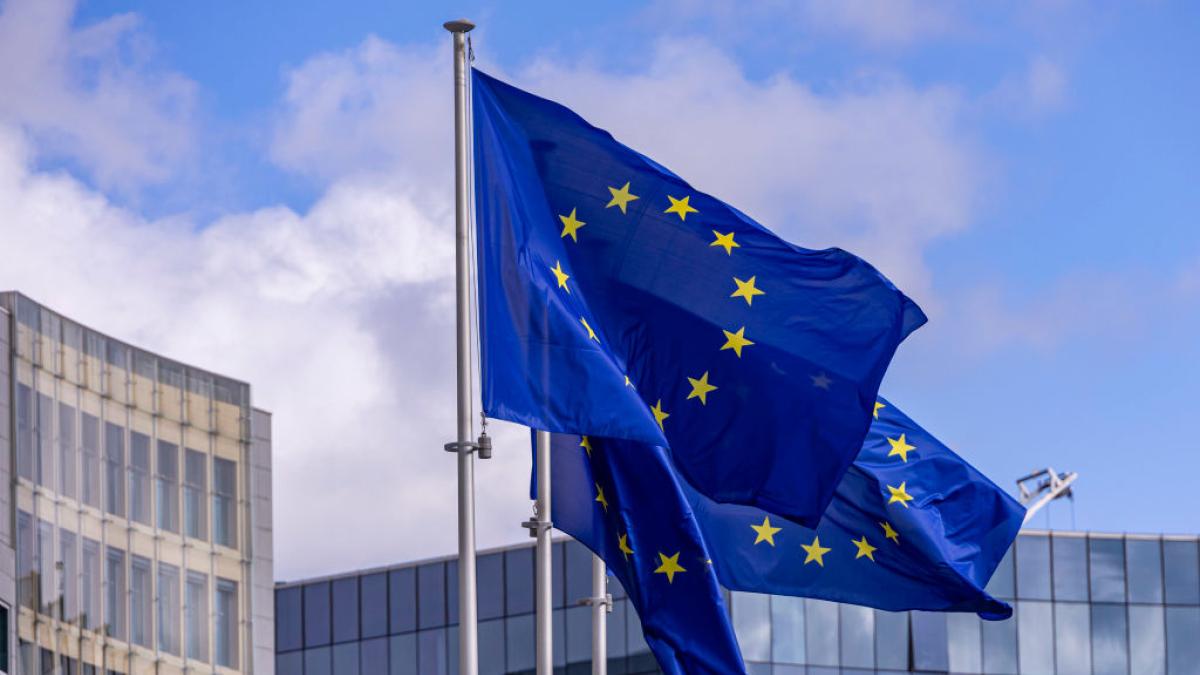
The EU is a structural net importer of frozen berries and fruit ingredients. Poland, Germany and the Netherlands act as main entry and distribution hubs. Ukraine competes on harvest-window pricing, short lead times to Central Europe and a growing base of processing facilities working to EU buyer specifications.
Market Trends
EU demand is shifting toward traceable, residue-screened supply: lot-level COA, pesticide multi-residue screening and origin transparency are becoming baseline buyer requirements. Organic-certified volumes and retail private-label programs are growing fastest.
Certifications
Frequently Asked Questions
What fruit and berry categories does Ukraine supply for export?
The core export offer covers berries (raspberry, strawberry, blueberry, blackberry, currants), stone fruits (sour cherry, sweet cherry, plum) and pome fruits, supplied fresh in season or processed as IQF, puree and concentrate.
Is frozen Ukrainian fruit available year-round?
Yes. IQF and puree formats are supplied year-round from cold-store stocks, subject to availability after the main season. New-season pricing typically settles within 4–8 weeks after harvest start.
What documentation accompanies fruit shipments to the EU?
Standard sets include CMR consignment note, commercial invoice, packing list and a lot-specific COA. Depending on product form, a phytosanitary certificate may apply — confirm current requirements with your broker.
What is a realistic MOQ for fruit and berry programs?
Industrial formats typically start from one pallet for trials; contracted programs run in FTL lots of 20–24 tonnes. Mixed-product pallets are sometimes possible at season start — confirm per supplier.
Popular Questions
- Are frozen vegetables less nutritious than fresh ones?Not straightforwardly, and the comparison depends almost entirely on what the fresh comparator is. Freezing itself preserves nutrients well. Once the…
- Are hemp seeds legal to import into the EU as food?Hulled hemp seed is an established food, but tetrahydrocannabinol levels and the novel food position of extracts both need checking for the destinatio…
- Are sulphites allowed in organic dried fruit?The permitted uses of sulphur dioxide and sulphites in organic production are narrower than in conventional production. Organic processing may only us…
- Are wild mushrooms a novel food in the EU?Whole fruiting bodies of long-consumed species are not. Mycelium from fermentation, extracts and concentrated fractions can be, and the operator carri…
- BRCGS or IFS Food: which certification should a supplier hold?Both are GFSI-recognised, so for most buyers either is acceptable. The choice follows the customer base rather than the standard.
- Can a minimum order quantity be negotiated?Often, but not by asking for a smaller number. An MOQ usually reflects a production run, a packaging order or a full load, and it moves when one of th…
Related Knowledge
- Aflatoxin Management in Tree Nuts: Sorting, Sampling and What the Certificate Proves
- Allergen Management in Mixed Facilities: Nuts, Soy, Sesame and Gluten Under One Roof
- Aseptic Fruit Puree: The Process, the Specification and the Failure Modes
- Berry Grade Classification: How Frozen Berry Grades Are Actually Built
Quick Facts
- Season / availabilityMay–October depending on crop; frozen available year-round
- Main originsVolyn, Ternopil, Khmelnytskyi, Vinnytsia, Zakarpattia, Lviv
- Shelf lifeUp to 24 months frozen at −18 °C; fresh 3–10 days at 0–2 °C
- HS codes0810 (fresh) / 0811 (frozen) — verify 8-digit CN code with your broker
On this page
Key Standards
Products in this category
-
Frozen Redcurrant IQF
Bulk IQF redcurrant from Ukraine. Why destemming yield is the real cost driver, how titratable acidity rather than…
-
Frozen Aronia (Chokeberry) IQF
Bulk IQF aronia from Ukraine. Why this berry is bought as a colour and polyphenol input rather than…
-
Frozen Sea Buckthorn Berry
Frozen sea buckthorn from Ukraine. Why the branch is cut and frozen before the berry is separated, what…
-
Frozen Mixed Berries IQF
IQF berry blends from Ukraine. Why a mix specification is a tolerance document rather than a recipe, how…
-
Aseptic Berry Puree
Aseptic berry puree from Ukraine. How the aseptic process actually works, why ambient storage changes the whole logistics…
-
Frozen Elderberry
Frozen elderberry from Ukraine. A fruit almost nobody eats and almost everybody has consumed: how the destemming step…