Skip to content
  • Delivering Ukrainian agricultural products to the world
  • Verified information
  • Reliable data
  • Independent platform

Market

Germany

The largest and the most document-driven destination in the corridor

  • Road distance to Berlin1,300 km
  • Typical door to door transit3-4 days
  • Contract temperature, no exceptions-18 C

Market Overview

What Germany buys

Germany is the largest single European destination for frozen fruit and a significant destination for frozen vegetables, honey, cereals and oilseed products. For a Ukrainian supplier it is the market with the highest ceiling and the highest entry cost, and the entry cost is paid in documentation rather than in price.

Four buyer types matter, and they do not behave alike.

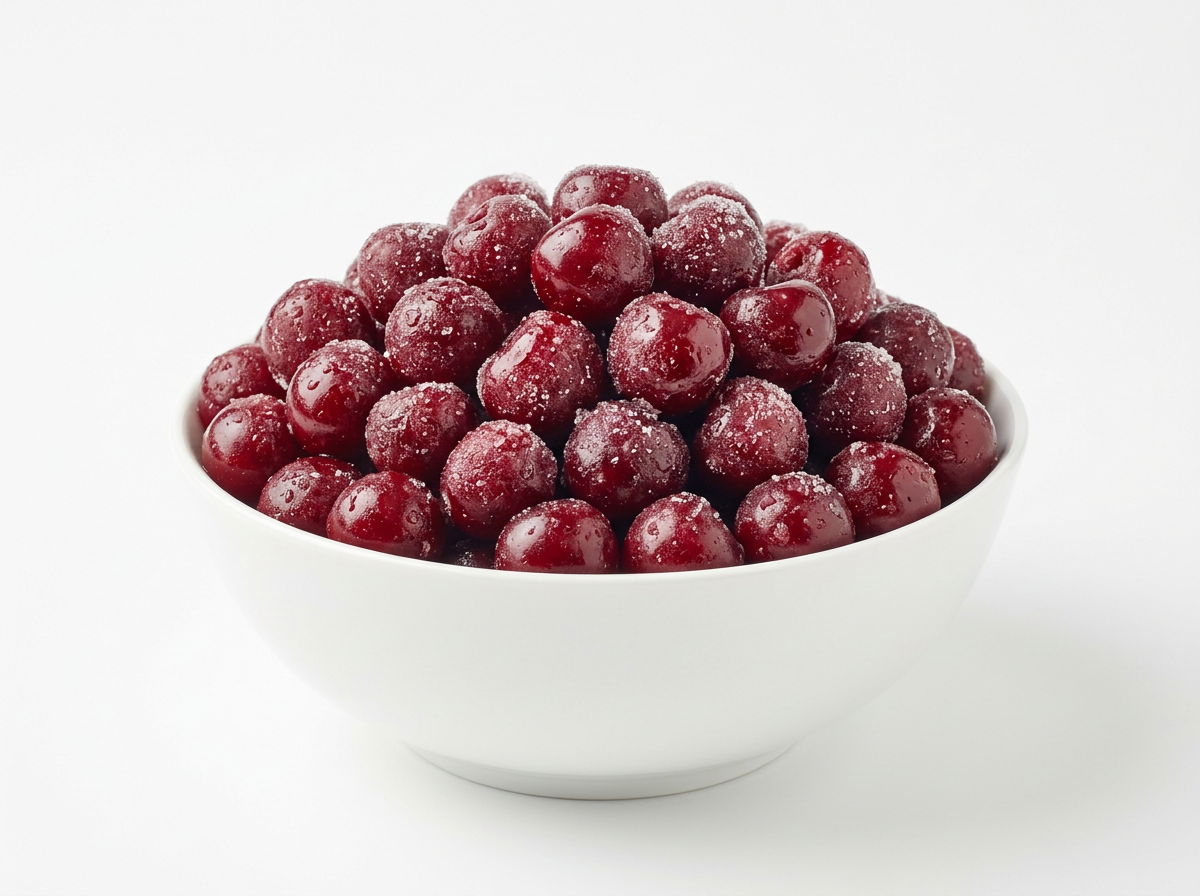
  • Industrial processors buying raspberry, sour cherry, blackcurrant and strawberry as inputs into dairy, bakery, confectionery and beverage production. They buy on analytical specification, in full loads, against seasonal contracts with monthly call-offs.
  • Retail packers and private label houses converting bulk into consumer packs. They need free-flowing IQF quality, tight defect counts, reliable pack weights and an audit position that will survive a retailer’s own visit.
  • Frozen food wholesalers and food service distributors. Mixed portfolios, mid-size volumes, faster decisions, less tolerance for a missed delivery.
  • Importers and traders reselling within Germany and onward. Their requirement is a specification robust enough to survive being resold to a buyer they never name to you.

How the buying side is organised

German buying desks are concentrated and procedural. A supplier is assessed on a written file before anyone tastes anything: certification scope, HACCP plan summary, allergen management, laboratory programme, traceability test result, insurance, and increasingly a supply chain due diligence questionnaire. The technical approval and the commercial negotiation run as two separate processes, and the commercial one does not start until the technical one has cleared.

The practical consequence is that the fastest route into Germany is a complete supplier file, not a low price. See the supplier approval pack guide for what the file contains.

What sits above EU law

The statutory baseline is the same as anywhere in the Union. What is specific to Germany is the layer of buyer requirements on top of it: a GFSI-recognised certificate as a listing condition, a documented due diligence position, an audited allergen and foreign body regime, and a receiving discipline that treats delivery windows as contractual rather than indicative.

None of these are legal obligations. All of them are decision criteria.

Logistics and calendar

The Berlin corridor runs by road reefer through Poland, around 1,300 km, three to four days door to door including the border. The equipment is an ATP class FRC reefer running a set point of minus 20 C to hold minus 18 C at the load, with continuous temperature logging and the record travelling with the consignment.

The calendar is driven by the harvest and by the buyer’s planning horizon, which are months apart. Contracting for a base programme starts before the crop is in; call-offs run through the following year; carryover stock is repriced against the coming crop from late winter.

  • Documentation is the gate

    German buyers filter on the supplier file first and on price second. A complete, coherent file gets a sample request; an incomplete one gets no reply.

  • Four distinct buyer segments

    Industrial processors, retail packers, wholesalers and importers buy different specifications at different rhythms. Quoting all four the same way loses all four.

  • Delivery windows are literal

    A two hour receiving slot means two hours. A missed slot costs a day with the reefer running.

Import Requirements

Key requirements for food products imported from Ukraine.

  • Food business operator traceability

    One step back and one step forward traceability under Article 18 of Regulation (EC) No 178/2002. In practice buyers want lot level traceability that survives a split pallet, not batch level traceability that stops at the production day.

  • Quick-frozen temperature discipline

    Minus 18 C or colder throughout, with the short upward fluctuations permitted by Council Directive 89/108/EEC treated as an exception to be recorded, not as a working tolerance. Recording instruments and record retention follow Commission Regulation (EC) No 37/2005.

  • Contaminant and residue limits

    Maximum levels under Regulation (EC) No 1881/2006 as amended and pesticide residue limits under Regulation (EC) No 396/2005. Buyers usually ask for a residue testing plan rather than a single certificate.

  • Consumer information

    Mandatory particulars under Regulation (EU) No 1169/2011 for anything reaching a consumer, in the language of the country of sale. Bulk industrial packs carry the buyer's agreed identification instead.

  • GFSI-recognised certification

    Not a legal requirement. In practice a certificate from a GFSI-recognised scheme covering the exact site, product category and process is a listing condition for retail and for most industrial buyers. IFS Food is the most commonly encountered scheme in German-speaking supply chains.

  • Supply chain due diligence

    German buyers ask suppliers to document human rights and environmental due diligence in their own operations and in their direct supply base. Answer with policies, records and corrective actions rather than with statements of intent.

  • Organic where claimed

    Organic product needs a valid certificate whose scope annex covers the product and the process, plus a certificate of inspection in TRACES NT for the consignment. Check the scope annex, not the front page.

  • Remaining shelf life on arrival

    German retail and industrial contracts commonly set a minimum remaining shelf life at delivery, expressed as a fraction of total shelf life. It is a contractual requirement rather than a legal one, and it is the most frequent reason a technically compliant frozen delivery is refused.

Logistics

  • Route

    Road reefer from western Ukraine through Poland to Berlin and onward to the western and southern distribution centres. Around 1,300 km to Berlin, three to four days door to door including the border.

  • Border

    Ukrainian and Polish crossings, with the EU entry formalities completed at the Polish frontier. Build waiting time into the promise rather than into the apology.

  • Equipment

    ATP class FRC reefer, set point minus 20 C to hold minus 18 C at the load, continuous logging with the record travelling with the consignment.

Seasonality

SpringContracting for the coming crop begins on estimates. Carryover stock is priced against the new season.
Summer to autumnHarvest and freezing. Volumes and grades become real, contracts are firmed up.
Autumn to winterPeak call-off period for industrial processing and retail promotions.
Late winterStock position reviews. Known lots hold price, unknown lots are discounted.

Market Insights

Trends and opportunities in this food market.

  • Private label growth

    Retail packers converting bulk into own-brand consumer packs are the fastest growing route to German shelves for imported frozen fruit.

  • Due diligence questionnaires

    Supply chain human rights and environmental questionnaires now arrive with the first specification request rather than after the first order.

  • Consolidation on the buying side

    Fewer, larger buying desks means fewer chances to make a first impression and a longer memory of a bad one.

  • Scheme-neutral purchasing

    Larger German buyers increasingly write the requirement as a GFSI-recognised scheme rather than as IFS Food specifically, which widens the eligible supply base without changing the audit bar.

FAQ

Is IFS Food mandatory for Germany?

No. It is not a legal requirement anywhere. It is, in practice, what most German retail and industrial buyers ask for, and the certificate has to cover the exact site and product category you are offering.

How far ahead should we contract?

For a base programme, before the crop is in. A supplier who can only confirm availability two weeks out will be used for gap filling rather than for the base volume.

What language do labels need?

Anything reaching a German consumer needs German mandatory particulars under Regulation (EU) No 1169/2011. Bulk industrial packs run to the buyer’s own identification specification.

What kills a first order?

A missed delivery slot, a temperature record with a gap, and a certificate whose scope does not cover the product shipped. In that order.

Do German buyers accept BRCGS instead of IFS Food?

Usually yes. Both schemes are benchmarked to the same GFSI requirements, so the food safety level is not in question. The exception is a buyer whose own downstream customer names IFS Food contractually. Ask before assuming, and verify the scope and dates on whichever certificate is offered.

Is IQF or block frozen fruit the norm for Germany?

Both, in different channels. Retail packers and food service take IQF because appearance and portioning matter. Industrial users making puree, jam, juice and bakery filling take block, where the price gap is real and the downstream process removes the reason to pay for free-flowing fruit.

Next step

Need these specifications confirmed for your order size?

Send the volume and destination and we reply with availability, packaging options and the documents required.

Vorezan publishes reference information for buyers and suppliers. We are not a certification body, a customs broker or a guarantor of any third party. Regulatory references point to the framework in force at the review date; verify the current consolidated text and your own obligations before relying on them commercially.

Last updated: August 22, 2026Sources & references

Market Potential

  • Road reefer via Poland

    Corridor

    Rail and multimodal exist but are rarely competitive for part loads

  • GFSI-recognised scheme

    Certification expectation

    IFS Food is the scheme most often encountered in German-speaking chains

  • Seasonal contract, monthly call-off

    Buying rhythm

    Spot buying is used to fill gaps, not to build a programme

  • Complete file before arrival

    Documentation

    Late paperwork is treated as a supplier reliability signal

Looking for Germany?

Submit your requirements and our team will get back to you with suitable options.

Submit inquiry

Sources

Official and industry sources we rely on.