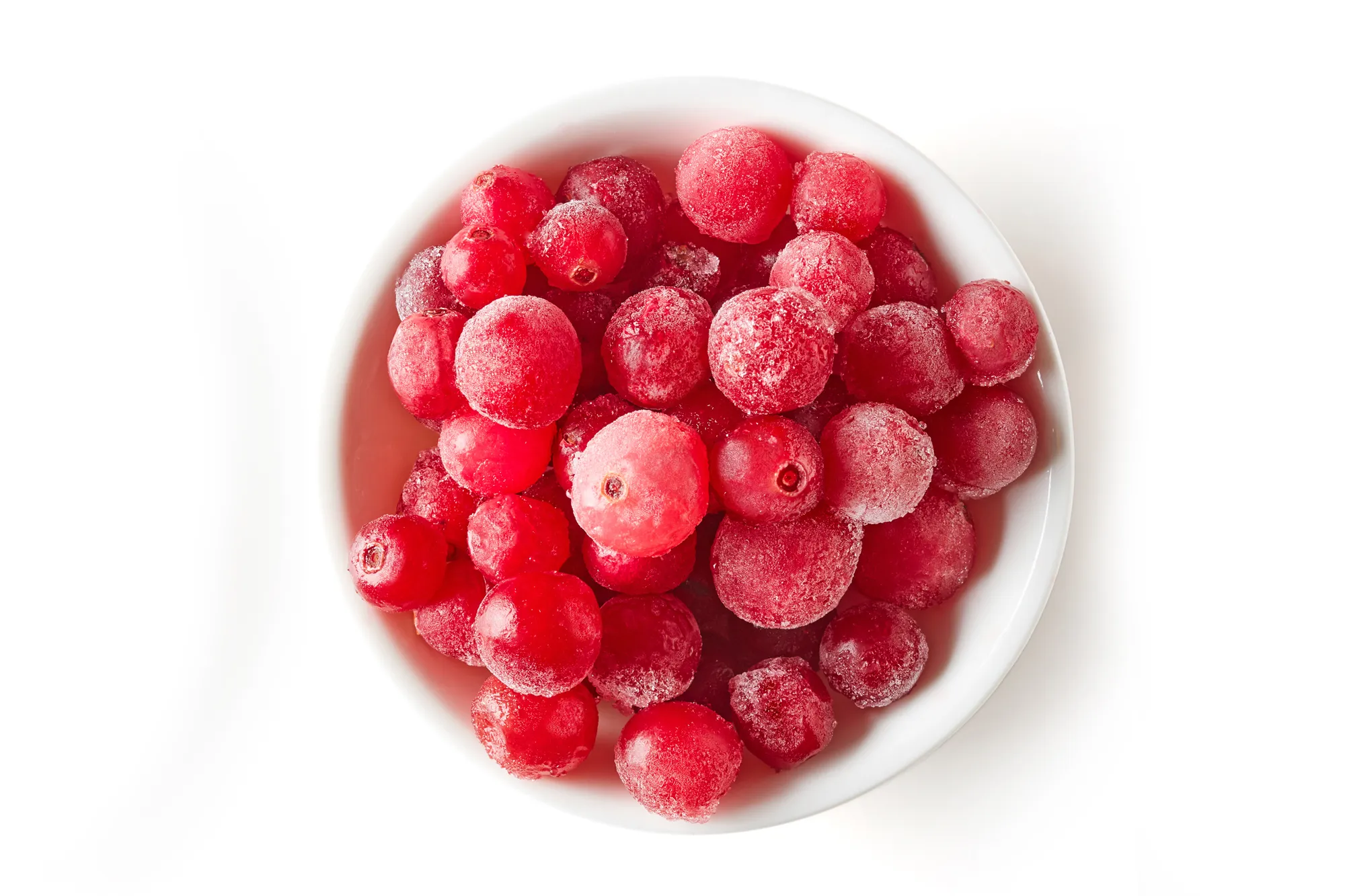
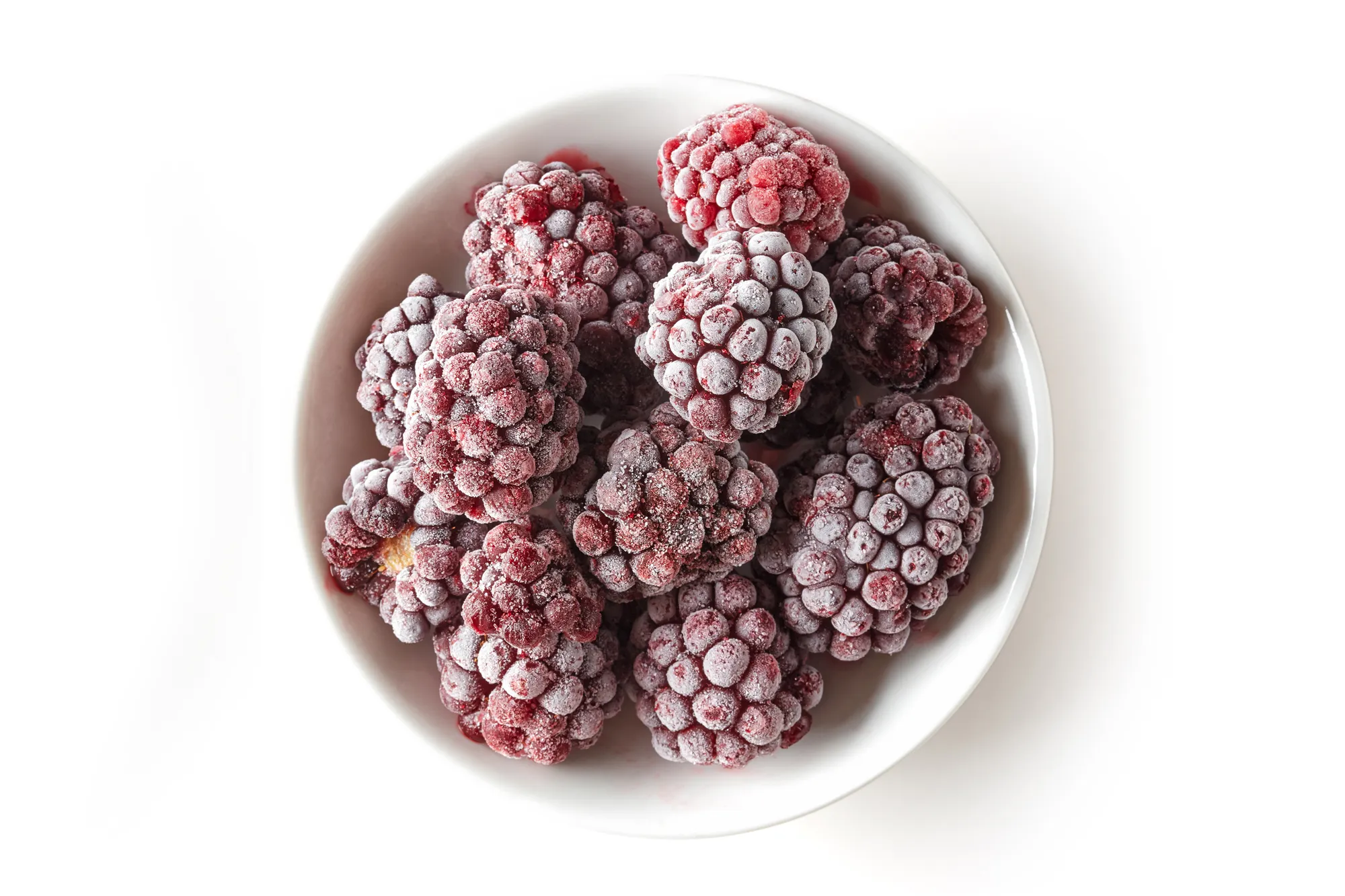
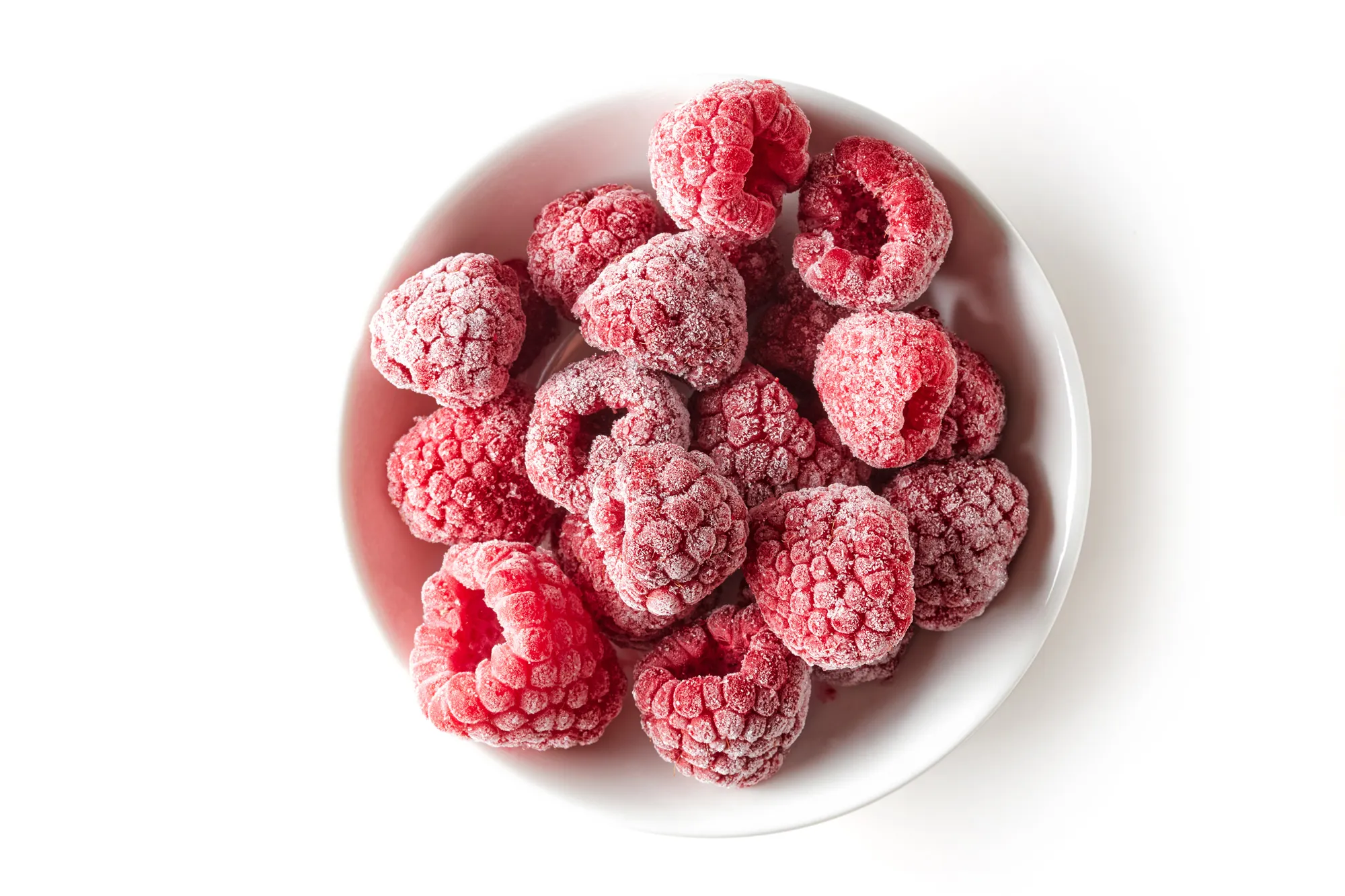
Individually quick frozen raspberry is the highest value berry in the Ukrainian frozen range and the one where the difference between two offers is most often a difference in grading rather than in quality. The fruit is harvested by hand, cooled, frozen in a fluidised bed or spiral tunnel, then sorted optically and manually into whole fruit, broken fruit and crumble. Buyers who need visible berries on a product surface, in a premium yoghurt topping or a patisserie decoration, buy whole grade. Buyers who process the fruit into a puree, a coulis, a filling or a juice concentrate buy crumble, because the fruit is going to be broken anyway and paying for intact berries makes no sense.
Seasonality and availability
The Ukrainian raspberry harvest runs from late June into September, with the main summer-bearing volume in July and a second autumn-bearing crop in late August and September. Freezing capacity is tightest during the peak, which is when quality is best and when the freezing tunnels are working hardest, so the fruit frozen in the first days of a heavy harvest is not always the fruit with the best core temperature history. Product is drawn from cold store for the rest of the year. Prices typically soften shortly after the harvest is complete and firm through the second quarter as stocks are drawn down. If you need a fixed price for a full year, the contract has to be placed before or during the harvest, not in April.
What the buyer checks at intake
- Core temperature on arrival, taken between cartons and not on the pallet surface. Anything warmer than minus eighteen degrees Celsius needs the reefer download before the pallet is accepted.
- Grade against the agreed definition. Count whole, broken and crumble on a weighed sample, do not eyeball a carton.
- Free-flowing behaviour. Clumps mean the product was warmed and refrozen somewhere, or was frozen too slowly.
- Ice glaze and free ice in the bag. Excess free ice is paid-for water.
- Foreign bodies, leaves and stalks against the agreed defect tolerance.
- Colour and drip on thaw, on a retained sample rather than on the line.
Related standards and routes
Most volume moves by road in a temperature-controlled reefer through the western Ukrainian border crossings into Poland and onward into Germany and the Netherlands. Sea freight is used for longer destinations. Suppliers are normally certified to a GFSI-recognised scheme, most often BRCGS or IFS Food, and organic product carries EU organic certification on top.