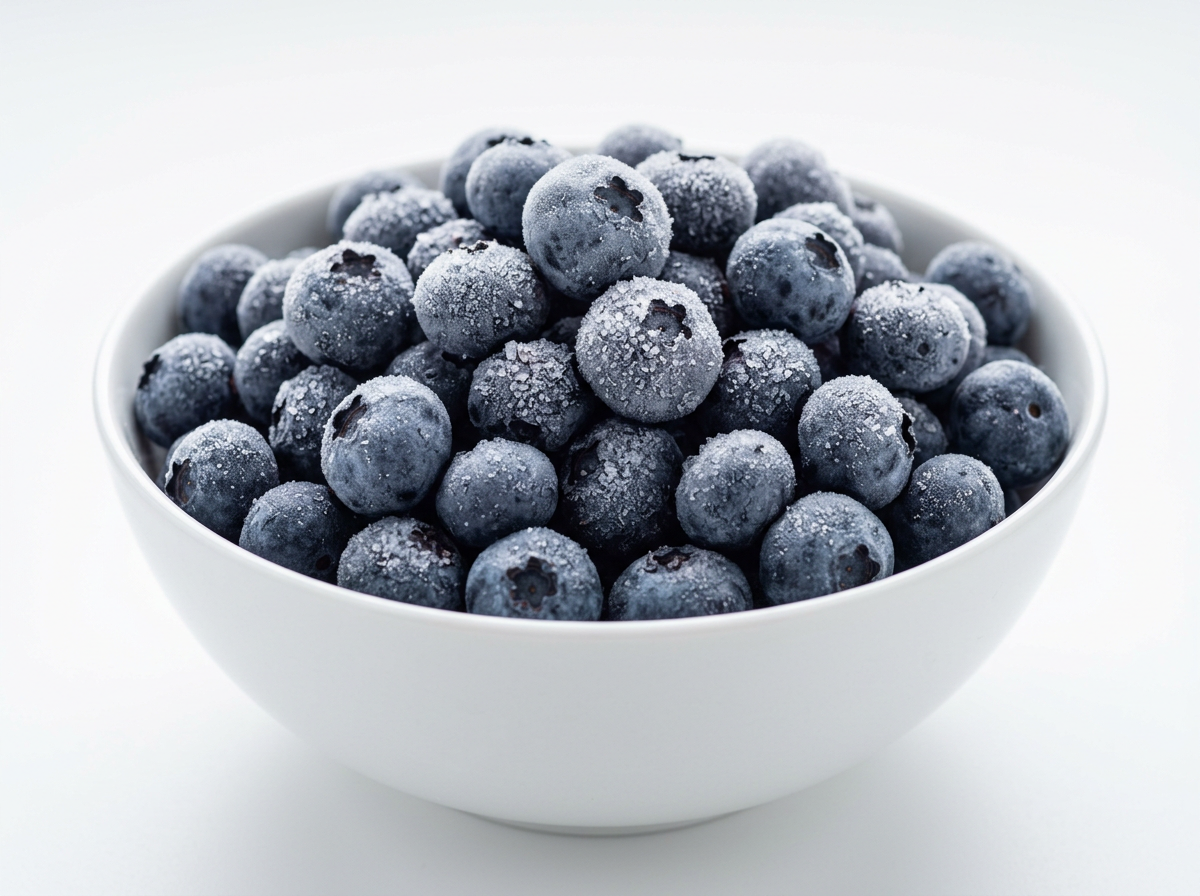
A frozen berry specification does three separate jobs: it describes the fruit, it sets the appearance tolerance, and it sets the safety limits. Buyers who merge them into one paragraph end up with a document that cannot be tested. This guide separates the three and shows what a testable clause looks like for frozen berries.
Family one: compositional parameters
Brix measures soluble solids, read on a refractometer and expressed in degrees. For berries it is a proxy for ripeness and sweetness, and it correlates loosely with yield in juice and puree applications.
Three practical cautions:
- Brix varies with variety, season and growing region far more than with processing. A tight Brix window is a supply risk, not a quality guarantee.
- The measurement must be taken on a defined preparation. Whole thawed fruit, drained fruit and homogenised pulp give different readings.
- For sour cherries and blackcurrants, acidity matters as much as Brix. Specify the Brix-to-acid ratio if the application is taste-sensitive.
Other compositional parameters worth naming when they matter: pH, titratable acidity, dry matter, and for glazed product the glaze percentage.
Family two: defect and appearance parameters
These are covered in detail in frozen berry grades. The short version: name each defect category, give a percentage by weight, define the thawing protocol used for assessment, and attach a sampling plan. Without the last two, the numbers are unenforceable.
Family three: safety parameters
Microbiology
Regulation (EC) No 2073/2005 on microbiological criteria for foodstuffs, as amended, sets the legal framework in the EU. Frozen berries have been the subject of specific attention because of viral contamination incidents, so buyer specifications commonly go beyond the legal minimum.
A workable specification names, for each organism:
- the organism or indicator,
- the limit and the unit,
- the analytical method or its reference,
- the sampling plan,
- whether the limit is a food safety criterion or a process hygiene indicator.
Check the current consolidated text of Regulation (EC) No 2073/2005 before quoting a number. It has been amended repeatedly and specifications that cite a superseded value cause real problems at audit.
Typical parameter families for frozen berries include aerobic colony count and Enterobacteriaceae as hygiene indicators, Escherichia coli as a faecal indicator, Salmonella as a safety criterion, and – for ready-to-eat berry applications – virological testing where the risk assessment calls for it. The exact set should come from your own hazard analysis, not from a template.
Pesticide residues
Maximum residue levels are set by Regulation (EC) No 396/2005 and its implementing acts. The correct clause references the regulation as applicable at the time of placing on the market, rather than listing values that will age. Add:
- who pays for residue testing and at what frequency,
- which accredited laboratory scope is acceptable,
- what happens on a detection below the MRL but above your customer’s own threshold, which is increasingly common in retail supply.
Heavy metals and contaminants
Contaminant limits sit in the EU contaminants framework. For berries the practically relevant entries are usually lead and cadmium. Reference the regulation rather than transcribing values.
A testable clause looks like this
| Element | Weak version | Testable version |
|---|---|---|
| Brix | “Good sweetness” | “Minimum 8.0 degrees Brix on homogenised thawed pulp, refractometer at 20 degrees Celsius” |
| Broken fruit | “Minimal breakage” | “Maximum 8 percent by weight after the agreed thaw protocol, plan attached” |
| Salmonella | “Free from pathogens” | “Absent in 25 g, method reference stated, n=5 c=0” |
| Residues | “EU compliant” | “Compliant with Regulation (EC) No 396/2005 as applicable; certificate of analysis per lot from an accredited laboratory” |
| Foreign material | “No foreign bodies” | “Absent; metal detection at stated sensitivities on the packing line, records retained” |
Common mistakes
- Copying limit values from an old specification. EU microbiological and contaminant rules are consolidated and amended; a hard-coded number ages badly.
- Specifying a limit with no method. Different methods give different answers, and the dispute becomes unresolvable.
- Requiring “free from” language. Analytical results are limits of detection, not absolutes. “Absent in 25 g by the stated method” is meaningful; “free from” is not.
- Testing only on approval. Approval samples are the supplier’s best day. Build routine lot testing into the plan.
- Ignoring the customer-specific threshold. Many retailers apply residue thresholds stricter than the legal MRL. If you supply them, that threshold is your real limit.
A practical example
An importer specified aerobic colony count and Salmonella but no Enterobacteriaceae. Two lots passed both stated criteria while showing a rising hygiene-indicator trend the supplier was tracking internally and had no obligation to report. The trend later coincided with a line hygiene issue. Adding a process hygiene indicator with a trend clause – the supplier reports the last twelve results on request – gave the importer early warning without adding a rejection criterion.
FAQ
Which regulation sets microbiological limits for frozen berries in the EU?
Regulation (EC) No 2073/2005 on microbiological criteria for foodstuffs, as amended. Always work from the current consolidated text.
Should I test every lot?
Test frequency should follow your risk assessment and the supplier’s track record. A common pattern is full panel on approval and on the first lots, then a reduced routine panel with periodic full verification.
Does freezing kill pathogens?
No. Freezing suspends microbial growth; it does not reliably inactivate pathogens. Any pathogen present before freezing should be assumed present after thawing.
What Brix should I specify for raspberry?
That depends on variety and season, and a narrow window will cost you supply. Set a minimum tied to your application and review it against two seasons of actual results before tightening it.