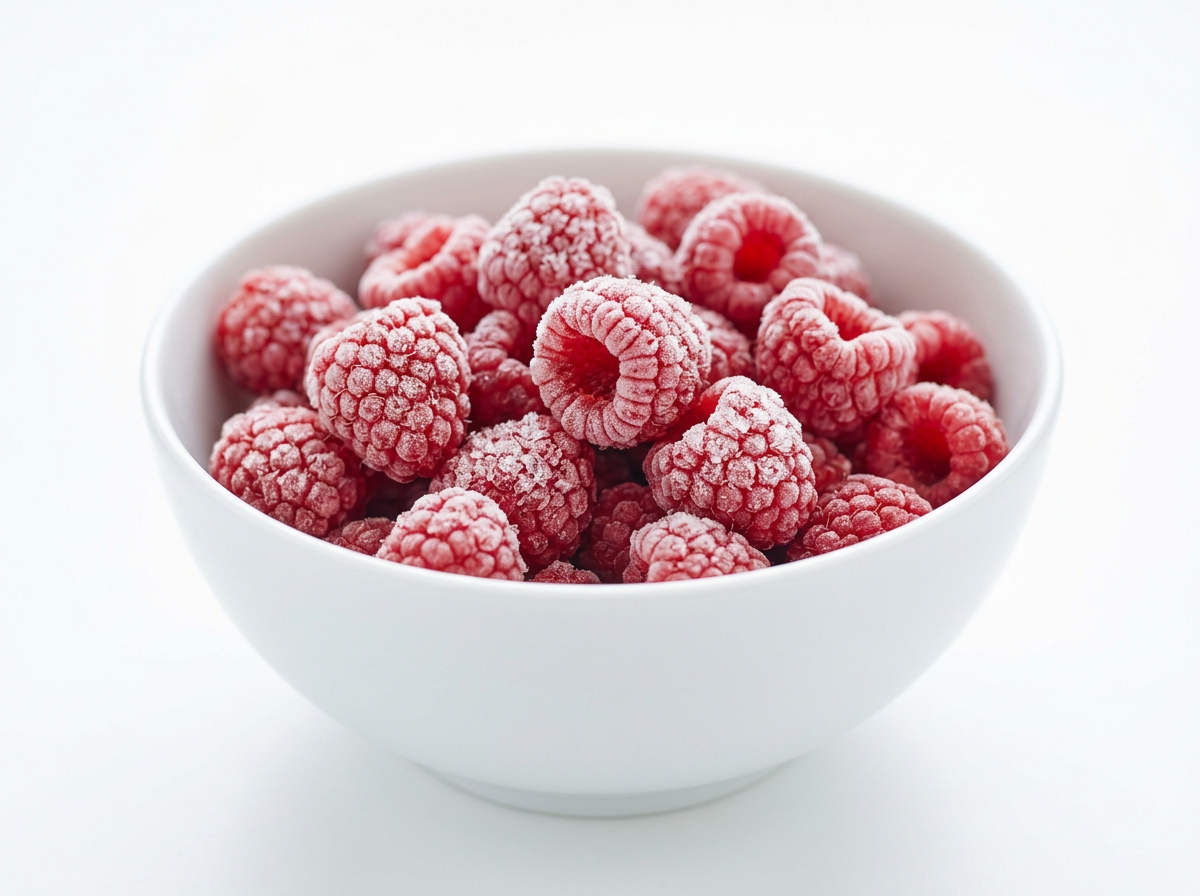
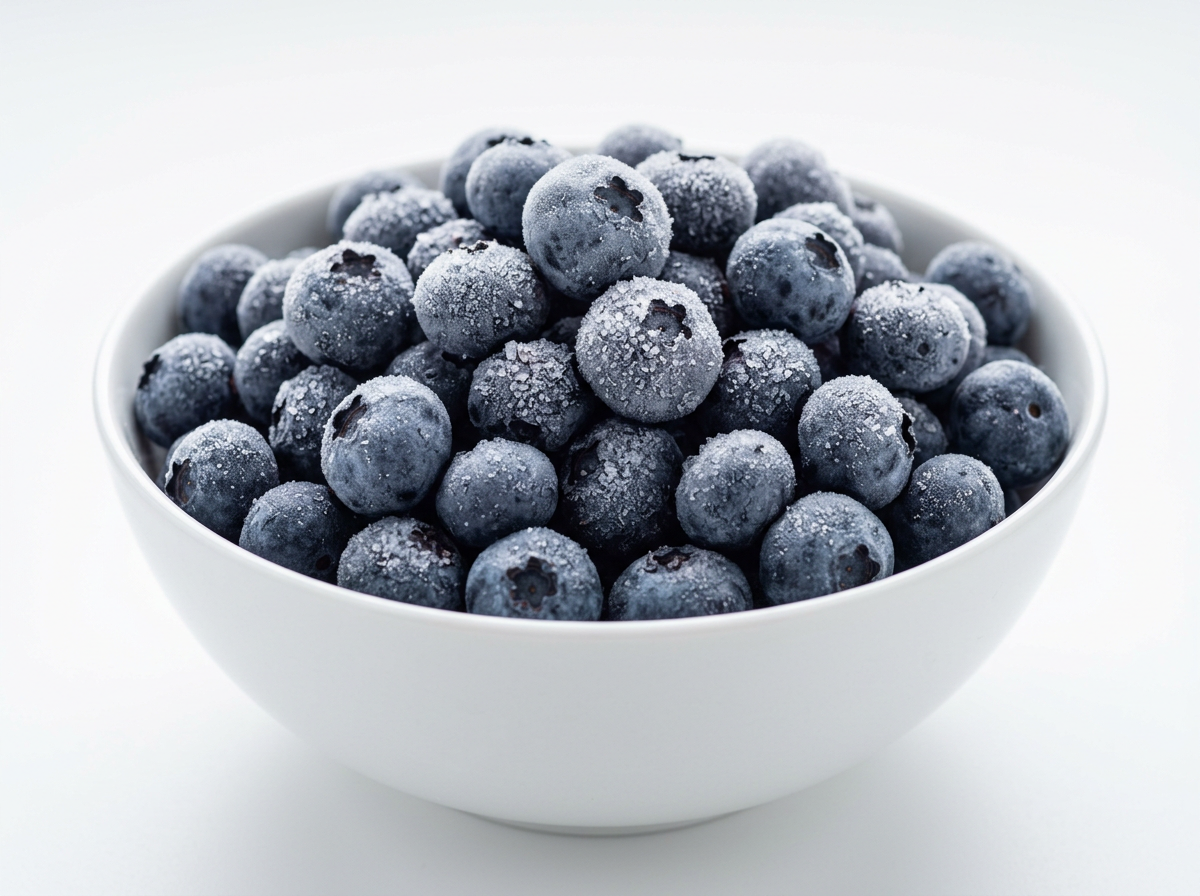
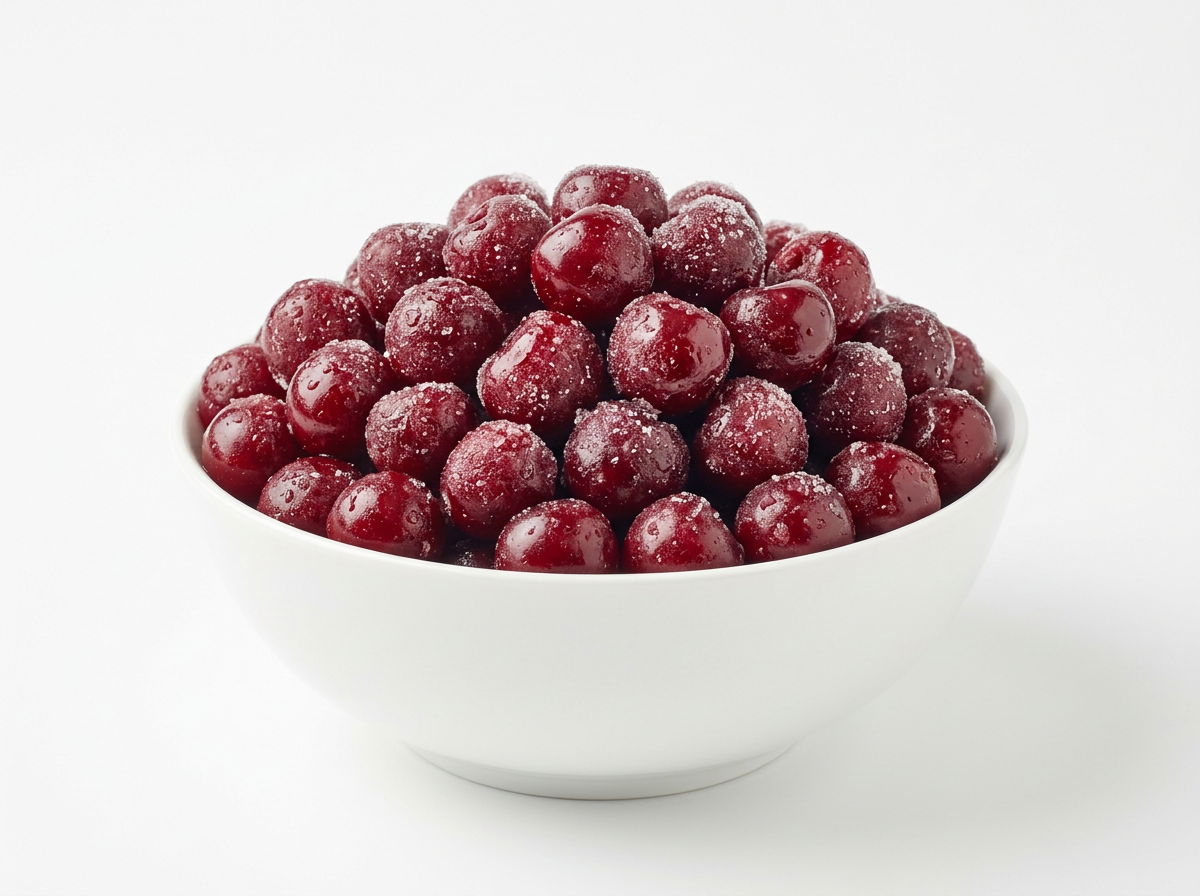
IQF stands for individually quick frozen: each berry or vegetable piece is frozen separately so the finished product pours instead of sticking together in a block. If you are sourcing frozen berries from Ukraine, the freezing method decides more of your specification than most buyers expect – it drives free-flow behaviour, drip loss, visual grade and how much broken fruit you receive after transport.
This guide walks through the process as it runs in a commercial line, explains which parameters belong in your written specification, and shows how to read a supplier’s answer.
What IQF actually means
The defining feature is speed. Water inside plant tissue freezes into ice crystals; the faster it passes through the -1 to -5 degrees Celsius zone where most crystals form, the smaller those crystals stay. Small crystals do less damage to cell walls, so the fruit holds its shape and releases less liquid on thawing. Slow freezing produces large crystals and the soft, weeping texture buyers describe as watery.
A commercial IQF tunnel drives product through that critical zone in minutes rather than hours. Air at -35 to -40 degrees Celsius is blown upward through a perforated belt at a velocity high enough to lift and separate the pieces. That fluidised bed is what keeps the berries individual: they never touch long enough to freeze together.
IQF is a process, not a quality grade. A poorly graded raspberry frozen in a modern tunnel is still a poorly graded raspberry. Ask for both the process and the grade.
Step by step through the line
- Reception and lot identification. Fruit arrives from the field or from a chilled buffer store. Each intake is logged against a grower lot so traceability under Regulation (EC) No 178/2002 Article 18 can be reconstructed later.
- Sorting and destemming. Leaves, stems, unripe and overripe fruit are removed. For cherries, pitting happens here.
- Washing. Potable water, usually in a flotation washer that lifts light debris away without bruising the fruit.
- Dewatering. Vibrating screens and air knives remove surface water. Skipping this step is the single most common cause of clumping – free water freezes into bridges between berries.
- Optical sorting. Cameras and, on newer lines, near-infrared sensors reject discoloured pieces, foreign material and off-size fruit.
- Freezing. The fluidised bed tunnel. Residence time depends on piece size: small berries clear in 4 to 8 minutes, larger strawberries need longer.
- Grading and metal detection. Frozen fruit is graded by calibre on screens, then passes a metal detector or X-ray unit.
- Packing and palletising. Product goes into a food-grade polyethylene liner inside a carton, then straight into a store held at -18 degrees Celsius or colder.
Between the tunnel exit and the cold store, product should never dwell in ambient conditions. That handover is where most temperature abuse happens in practice.
Parameters worth putting in the specification
| Parameter | Typical requirement | Why it matters |
|---|---|---|
| Core temperature at packing | -18 degrees Celsius or colder | Confirms the tunnel finished the job, not the cold store |
| Free-flow behaviour | Free flowing, no clumps above the agreed size | Determines whether the product can be dosed automatically |
| Calibre | Stated range in millimetres per SKU | Drives yield in your own process |
| Foreign material | Absent | Non-negotiable; verify the detection method |
| Drip loss after controlled thaw | Stated percentage, method defined | The most honest proxy for freezing speed |
| Packaging | Food-contact liner compliant with Regulation (EC) No 1935/2004 | Legal requirement for EU placement |
Specify the method alongside the number. A drip loss figure without a thawing protocol is not comparable between suppliers.
Common mistakes
- Treating IQF as a guarantee of quality. It guarantees separation, not grade. Grade is a separate clause; see frozen berry grades.
- Accepting a specification without a temperature clause for transport. The tunnel is irrelevant if the reefer runs at -12 degrees Celsius.
- Assuming clumping always means bad freezing. It can also mean thawing and refreezing in transit, or inadequate dewatering before the tunnel. The two failures have different owners.
- Ignoring glazing. Some fruit is water-glazed to reduce dehydration. Glaze adds weight. Always agree whether the declared weight is net of glaze.
- Comparing prices across different calibres. A 15 to 25 millimetre strawberry and a whole-berry premium calibre are different products.
A practical example
A buyer receiving raspberries in 10 kilogram cartons reported clumping on arrival but no visible ice crystals inside the liner. Because there was no frost inside the bag, the temperature had not risen enough to melt and refreeze surface moisture at pack level; the likely cause was insufficient dewatering before the tunnel, which allows free water to bridge berries during freezing. The corrective action sat with the processing line, not the carrier. This distinction is worth learning: internal frost and ice sheets point at the cold chain, dry clumps point at the line.
FAQ
Is IQF fruit better than block frozen fruit?
Not universally. IQF is better when you need to dose exact quantities or present whole fruit. Block frozen is cheaper per kilogram and perfectly suited to purees, jams and juices where the fruit is broken down anyway. See IQF vs block frozen berries.
Does IQF change the nutritional profile?
Freezing itself is one of the gentlest preservation methods available; the losses that matter happen before freezing, during the delay between harvest and processing. Ask for the harvest-to-freeze interval rather than for a nutrient claim.
Can IQF fruit be refrozen after partial thawing?
Technically the product can be refrozen, but the ice crystal structure is destroyed and the fruit will arrive soft with high drip loss. Commercially it should be treated as a deviation and assessed case by case.
What temperature should IQF fruit be stored at?
-18 degrees Celsius or colder as a continuous condition. Short excursions during handling are expected and should be defined in the contract rather than pretended away.