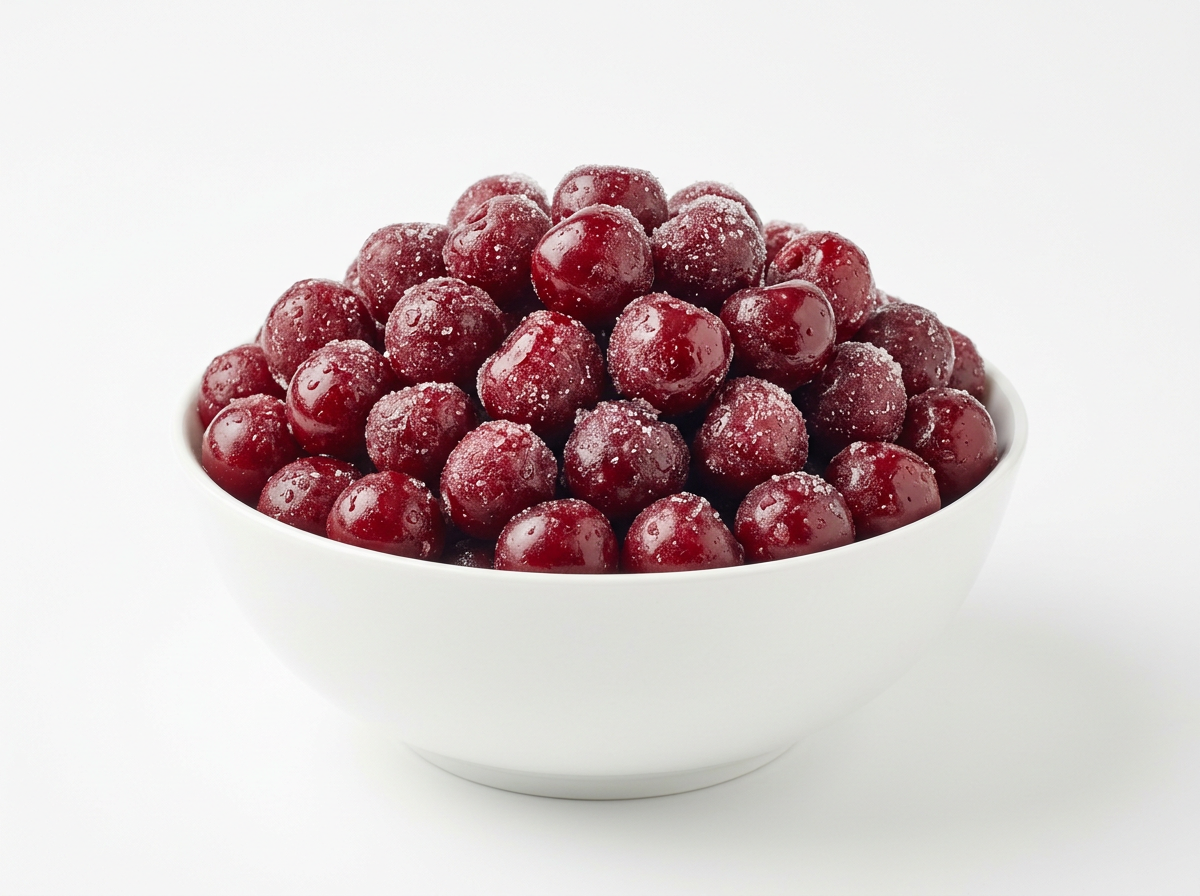
Season / availabilityJune–September depending on crop; frozen year-round
Main originsVinnytsia, Khmelnytskyi, Odesa, Zakarpattia, Cherkasy
Shelf lifeUp to 24 months frozen at −18 °C
Sour cherry, plum, apricot, peach and sweet cherry for freezing, canning and drying.
Overview
Ukrainian stone fruits — sour cherry, sweet cherry, plum, apricot and peach — are a core raw material for the EU jam, dairy, bakery and beverage industries, supplied fresh in season and as pitted IQF or puree for year-round processing.
Key facts
Season / availabilityJune–September depending on crop; frozen year-round
Main originsVinnytsia, Khmelnytskyi, Odesa, Zakarpattia, Cherkasy
Standard formats: pitted IQF (whole), unpitted IQF, puree and concentrate. Optical sorting and metal detection are standard at export-oriented facilities; pit detection methods vary — confirm per supplier.
Industrial: 10–20 kg cartons with PE liner, 300–500 kg octabins for puree/processing grades. Retail pouches for sour cherry exist but are less common than industrial formats.
Quality & Grades
Key buyer checks: pit-tolerance standards (residual stones per kg), MRL compliance and lot microbiology. Processors typically operate HACCP systems; confirm BRCGS/IFS status per facility and specify pit tolerance and defect limits in the contract spec.
Reefer FTL/LTL at −18 °C, 2–5 days DAP to most EU destinations. Documents: CMR, invoice, packing list, lot COA. Book early in the June–July sour cherry window — capacity tightens in peak weeks.
EU processors import large volumes of pitted sour cherry and plum for jams, yogurts and pastries. Ukraine offers competitive harvest-window pricing and established pitting/freezing capacity within 2–5 days’ road transit of Central European plants.
EU demand for sour cherry puree and pitted IQF is stable to growing; buyers increasingly lock volumes pre-harvest. Sugar-infused and bake-stable formats are emerging niches.
Sour cherry (pitted IQF and puree) is the leader, followed by plum and sweet cherry; apricot and peach volumes are smaller and mostly seasonal.
How is residual pit content controlled?
Pitting lines work to tolerance limits expressed as residual stones per kg. Confirm the tolerance, detection method (optical/X-ray where available) and claim procedure in the specification.
When should I contract sour cherry volumes?
Main harvest is June–July; pre-harvest contracting (April–May) secures volume and first-processing slots. Spot buying is possible but pricing firms quickly in short seasons.
Is fresh stone fruit export realistic?
Yes for nearby EU markets via express frigo, but shelf life is short and phytosanitary rules apply — most export volume moves as frozen or puree.
Vorezan provides informational and analytical content about agricultural products, markets, logistics and standards. We do not act as a seller, broker or guarantor of product quality or transactions.