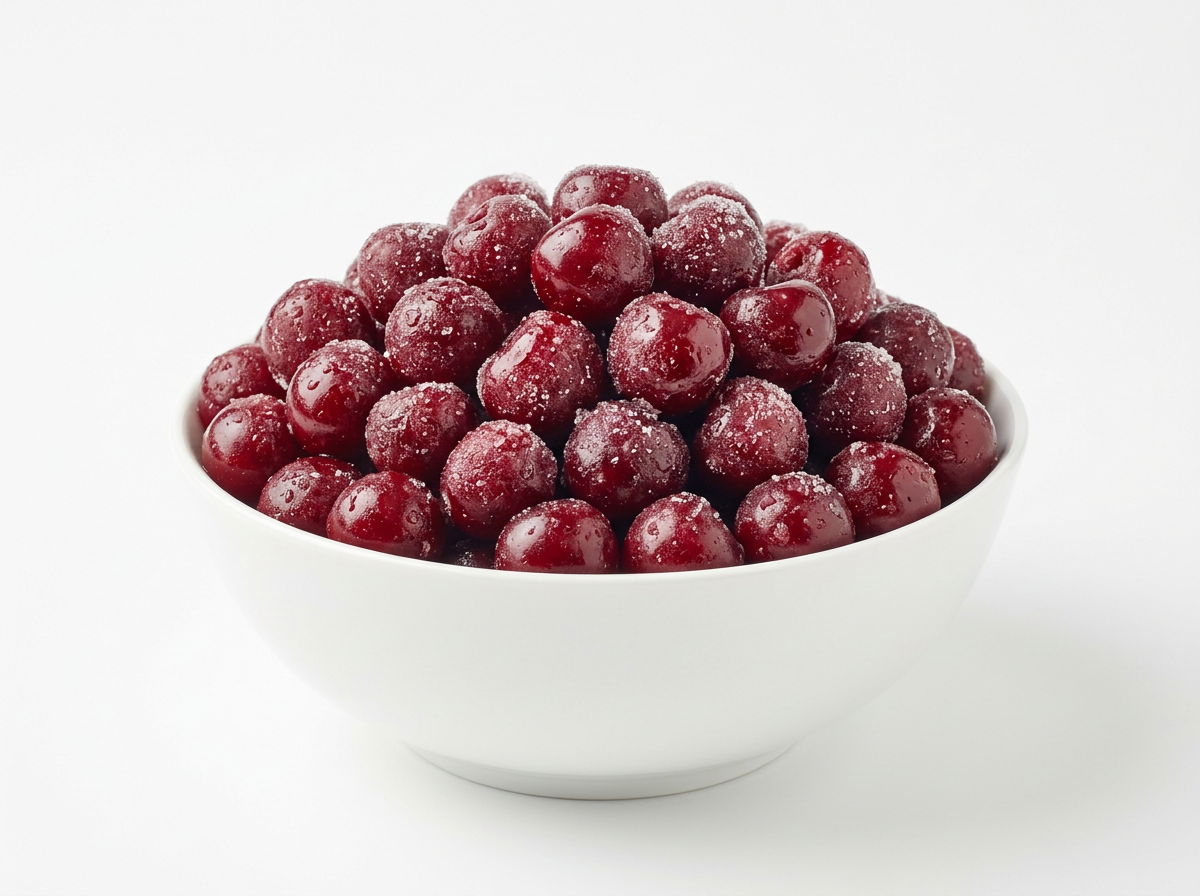
Unpitted sour cherry is the same fruit as the pitted product without the pitting step. That matters commercially because pitting costs money and costs yield: the pit and the flesh lost with it are both removed from the weight the buyer pays for. Where the fruit is going to be pressed, macerated or otherwise turned into a liquid, and where the pit is separated downstream anyway, buying unpitted is the cheaper and more sensible route. Where the fruit will be eaten whole or baked into a product, it is not an option, and the pitted grade is the one to buy.
Seasonality and availability
The harvest is short, running for a few weeks from late June into July, and the whole year’s volume is processed then. Unpitted product does not compete for pitting line capacity, which is the bottleneck during the peak, so it is often the easier grade to secure late in the season.
What the buyer checks at intake
- Brix and titratable acidity, which drive everything downstream.
- Core temperature at minus eighteen degrees Celsius or colder.
- Stalk content against the agreed tolerance.
- Damaged and split fruit against the tolerance.
- Free ice and glaze.
- Confirmation the lot is genuinely the unpitted grade, on a sample.
Related standards and routes
Road reefer to central Europe, in cartons or bulk bins. The same certification expectations apply as for the pitted grade.