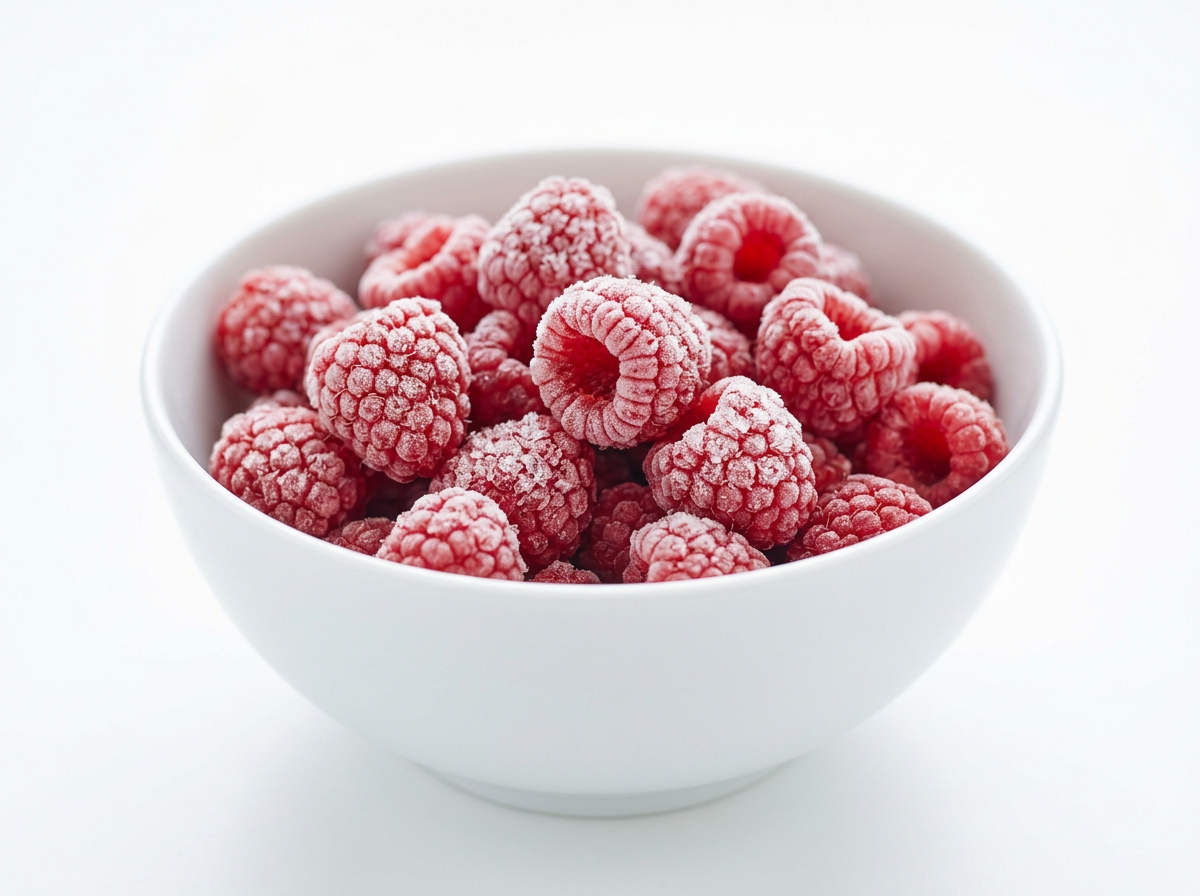
Freeze-dried raspberry is made by freezing the fruit and then removing the ice by sublimation under vacuum, so the water leaves without ever becoming liquid. The cell structure stays where it was, which is why the piece keeps its shape and colour and why it is crisp rather than chewy. It is also why it is expensive: the process is slow, it is energy intensive, and roughly ten kilograms of fresh raspberry are needed for one kilogram of finished product. The formats are whole fruit for visible inclusion, pieces or crumble for dispersion through a mass, and powder for colour and flavour delivery where no piece is wanted at all.
Seasonality and availability
The raw material comes from the June to September raspberry harvest, either fresh into the freeze-drier or from frozen stock. Because the drying capacity rather than the fruit is usually the constraint, lead times are driven by the drier schedule and not by the season. Plan on longer lead times than for frozen fruit, and expect the powder format to be the one with the least flexibility, because milling and packing add steps after the drier.
What the buyer checks at intake
- Moisture content and water activity, which together decide the shelf life.
- Packaging integrity. A compromised barrier is the single most common cause of a rejected lot.
- Piece integrity and the proportion of fines, on a sieved sample, at the agreed measuring point.
- Colour against a reference, on a sample taken immediately on opening.
- Crispness by hand. A leathery piece has picked up moisture somewhere.
- Foreign matter and, for powder, particle size distribution.
Related standards and routes
Freeze-dried product travels as ambient dry goods, not in a reefer, which makes the logistics simpler and cheaper than for frozen fruit. Protect it from humidity and from crushing. Suppliers are normally BRCGS or IFS Food certified.