Category
Blueberry
- Season / availabilityJuly–September (cultivated); wild bilberry July–August; frozen year-round
- Main originsZakarpattia, Volyn, Lviv, Rivne, Zhytomyr
- Shelf lifeUp to 24 months at −18 °C; fresh 5–10 days at 0–2 °C
Cultivated highbush blueberry from certified plantations; IQF and fresh supply.
Overview
Ukraine is one of Europe’s fastest-growing blueberry origins, with large cultivated highbush plantations and wild bilberry collection in the Carpathians. Supply covers fresh export in season and IQF for year-round industrial programs.
Key facts
- Season / availabilityJuly–September (cultivated); wild bilberry July–August; frozen year-round
- Main originsZakarpattia, Volyn, Lviv, Rivne, Zhytomyr
- Shelf lifeUp to 24 months at −18 °C; fresh 5–10 days at 0–2 °C
- HS codes0811.90 (frozen) / 0810.40 (fresh) — verify CN code
Main Product Types
Browse the sub-categories inside this group to reach individual product specifications.
- BlackberryUkrainian blackberry is a compact but growing export crop built on thornless varieties suited to IQF. The segment serves…2
- BlackcurrantUkrainian blackcurrant is a high-value industrial berry: naturally rich in vitamin C and anthocyanins, it is a core raw…2
- CranberryWild and cultivated cranberry, mainly frozen.2
- ElderberryElderberry for juice, concentrate and nutraceutical use.1
- GooseberryGooseberry for freezing and processing.1
- Other BerriesLess common berries: serviceberry, honeysuckle and similar.
- RaspberryUkraine is one of the world's largest exporters of frozen raspberries, built on smallholder picking networks and modern…5
- RedcurrantRedcurrant for freezing and processing.1
- StrawberryUkrainian strawberry is a established industrial crop: processing varieties for IQF, puree and jam alongside fresh desse…1
Processing Methods
Cultivated fruit is graded, optically sorted and IQF-frozen; wild bilberry is typically frozen in simpler whole-grade formats. Fresh export uses clamshell/top-seal punnets in 125–500 g formats with modified-atmosphere options per supplier.
Packaging Formats
Fresh: punnets in master cartons on pallets. Frozen industrial: 10–15 kg cartons with liner; retail pouches 300 g–1 kg. Confirm formats per supplier.
Quality & Grades
Key parameters: berry size bands, bloom retention, firmness, Brix, defects and MRL compliance. Plantation-scale suppliers run HACCP systems with optical sorting; confirm certification per facility and request lot COA with residue screening.
Export Considerations
Fresh: express frigo at 0–2 °C, 1–3 days to Central Europe. Frozen: reefer FTL/LTL at −18 °C. Temperature loggers recommended for fresh consignments.
Relevant Routes
- Ukraine → Berlin (Germany) — Reefer RoadReefer road corridor from Ukraine to Berlin and eastern Germany, gateway to the largest EU food market.
- Ukraine → Bucharest (Romania) — Reefer RoadReefer road corridor from Ukraine to Bucharest via the southern border, gateway to Romania and the Black Sea region.
- Ukraine → Prague (Czechia) — Reefer RoadReefer road corridor from Ukraine to Prague and the Czech market, with onward links to southern Germany.
- Ukraine → Rotterdam (Netherlands) — Reefer RoadLong-haul reefer corridor from Ukraine to Rotterdam, the main North Sea logistics hub, for Benelux and overseas-connected buyers.
Top Export Markets
EU blueberry demand keeps outpacing European supply. Ukraine competes with Poland, Spain, the Netherlands and overseas origins, winning on cultivated-area growth and competitive harvest pricing in the July–September window.

Market Trends
New plantation hectares entering production each season; calibre-sorted premium lots and organic-certified volumes command premiums; retail private-label programs expanding.
Certifications

Frequently Asked Questions
Cultivated or wild — what does Ukraine supply?
Both. Cultivated highbush dominates export growth (larger calibre, uniform lots); wild bilberry is a smaller, seasonal, premium-priced stream mainly for processing.
What size bands are available for IQF blueberry?
Suppliers typically sort by calibre bands (e.g. 8–12 mm, 12+ mm) — exact bands and tolerances are set in the spec sheet. Confirm before contracting.
Is fresh export to the EU realistic?
Yes, to Central European markets within 1–3 days’ transit, in punnets under cold chain 0–2 °C. Shelf life is the binding constraint — plan fast rotation.
Which documents accompany blueberry shipments?
CMR, invoice, packing list and lot COA; fresh fruit may require a phytosanitary certificate — confirm current rules with your broker.
Popular Questions
- Are frozen vegetables less nutritious than fresh ones?Not straightforwardly, and the comparison depends almost entirely on what the fresh comparator is. Freezing itself preserves nutrients well. Once the…
- Are hemp seeds legal to import into the EU as food?Hulled hemp seed is an established food, but tetrahydrocannabinol levels and the novel food position of extracts both need checking for the destinatio…
- Are sulphites allowed in organic dried fruit?The permitted uses of sulphur dioxide and sulphites in organic production are narrower than in conventional production. Organic processing may only us…
- Are wild mushrooms a novel food in the EU?Whole fruiting bodies of long-consumed species are not. Mycelium from fermentation, extracts and concentrated fractions can be, and the operator carri…
- BRCGS or IFS Food: which certification should a supplier hold?Both are GFSI-recognised, so for most buyers either is acceptable. The choice follows the customer base rather than the standard.
- Can a minimum order quantity be negotiated?Often, but not by asking for a smaller number. An MOQ usually reflects a production run, a packaging order or a full load, and it moves when one of th…
Related Knowledge
- Aflatoxin Management in Tree Nuts: Sorting, Sampling and What the Certificate Proves
- Allergen Management in Mixed Facilities: Nuts, Soy, Sesame and Gluten Under One Roof
- Aseptic Fruit Puree: The Process, the Specification and the Failure Modes
- Berry Grade Classification: How Frozen Berry Grades Are Actually Built
Quick Facts
- Season / availabilityJuly–September (cultivated); wild bilberry July–August; frozen year-round
- Main originsZakarpattia, Volyn, Lviv, Rivne, Zhytomyr
- Shelf lifeUp to 24 months at −18 °C; fresh 5–10 days at 0–2 °C
- HS codes0811.90 (frozen) / 0810.40 (fresh) — verify CN code
On this page
Related Categories
- BlackberryUkrainian blackberry is a compact but growing export crop built on thornless varieties suited to IQF. The segment serves…
- BlackcurrantUkrainian blackcurrant is a high-value industrial berry: naturally rich in vitamin C and anthocyanins, it is a core raw…
- CranberryWild and cultivated cranberry, mainly frozen.
- ElderberryElderberry for juice, concentrate and nutraceutical use.
- GooseberryGooseberry for freezing and processing.
- Other BerriesLess common berries: serviceberry, honeysuckle and similar.
- RaspberryUkraine is one of the world's largest exporters of frozen raspberries, built on smallholder picking networks and modern…
- RedcurrantRedcurrant for freezing and processing.
Key Standards
Products in this category
-
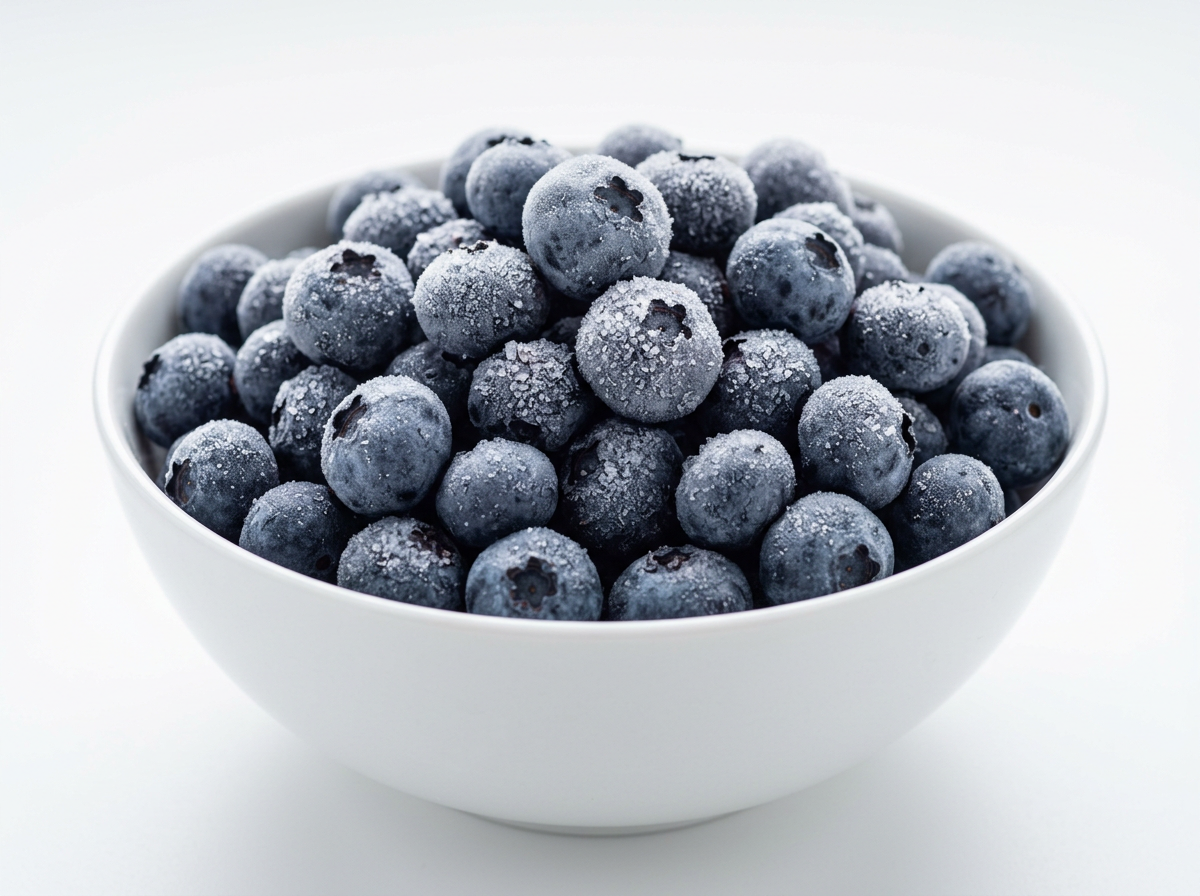
Frozen Blueberry IQF
IQF blueberry, cultivated and wild. Calibre ranges, seasonality, intake checks and the difference between the two types in…