Category
Honey
- Season / availabilityYear-round; packed and shipped throughout the year after seasonal harvest
- Main originsUkraine (principal floral types: sunflower, linden, acacia, wildflower)
- Shelf lifePer supplier TDS (typical commercial range 18-24 months)
Bulk honey for industrial packing; Ukraine is a top-3 EU honey supplier.
Overview
Natural honey is the sweet substance produced by Apis mellifera bees from plant nectar or honeydew secretions, defined and regulated in the EU by Council Directive 2001/110/EC. Ukraine is a significant supplier of natural honey to the EU market, with sunflower, linden, acacia and wildflower among the principal floral types traded. From 14 June 2026, amended EU rules require country-of-origin percentages on labels of honey blends, making origin documentation a core verification point for importers.
Key facts
- Season / availabilityYear-round; packed and shipped throughout the year after seasonal harvest
- Main originsUkraine (principal floral types: sunflower, linden, acacia, wildflower)
- Shelf lifePer supplier TDS (typical commercial range 18-24 months)
- HS codes0409.00
Main Product Types
Browse the sub-categories inside this group to reach individual product specifications.
Processing Methods
Extracted honey is centrifuged from decapped combs, then strained to remove wax and foreign matter. For bulk export, honey is homogenised and may be gently warmed to delay crystallisation before packing into drums or pails; creamed honey is produced by controlled crystallisation. EU rules prohibit adding any ingredient or additive to honey, and heating that destroys natural enzymes disqualifies the product from being marketed as honey.
Packaging Formats
Bulk export formats: food-grade drums and pails for industrial buyers; retail-ready jars and portion packs for private label programmes. For filtered honey and baker’s honey, bulk containers, packs and trade documents must clearly indicate the full product name (Directive 2001/110/EC, Art. 3).
Quality & Grades
EU composition criteria (Directive 2001/110/EC, Annex II): moisture not more than 20% (23% for heather), fructose + glucose at least 60 g/100g for blossom honey (45 g/100g for honeydew), sucrose not more than 5 g/100g in general, HMF not more than 40 mg/kg, diastase activity at least 8 (Schade scale). Nothing may be added to honey. Buyers typically request batch lab results for moisture, HMF, diastase and pollen profile.
Export Considerations
Honey is ambient cargo: no cold chain required, shipped in sealed containers protected from moisture and heat. Prolonged heat accelerates HMF formation and darkening; crystallisation is natural and reversible. From Ukraine, honey reaches the EU by road and rail via western border crossings; transport documentation should support the origin declaration required on the label.
Relevant Routes
- Ukraine → Berlin (Germany) — Reefer RoadReefer road corridor from Ukraine to Berlin and eastern Germany, gateway to the largest EU food market.
- Ukraine → Bucharest (Romania) — Reefer RoadReefer road corridor from Ukraine to Bucharest via the southern border, gateway to Romania and the Black Sea region.
- Ukraine → Prague (Czechia) — Reefer RoadReefer road corridor from Ukraine to Prague and the Czech market, with onward links to southern Germany.
- Ukraine → Rotterdam (Netherlands) — Reefer RoadLong-haul reefer corridor from Ukraine to Rotterdam, the main North Sea logistics hub, for Benelux and overseas-connected buyers.
Top Export Markets
The EU is one of the world’s largest honey import markets, and Ukraine has been among its leading third-country suppliers. Main buyer segments: industrial ingredient users (bakery, confectionery, beverages), private-label packers and retail brands. Since 14 June 2026, blend labels must list countries of origin in descending order with percentages, so importers should align supplier documentation with the updated origin declarations.
Market Trends
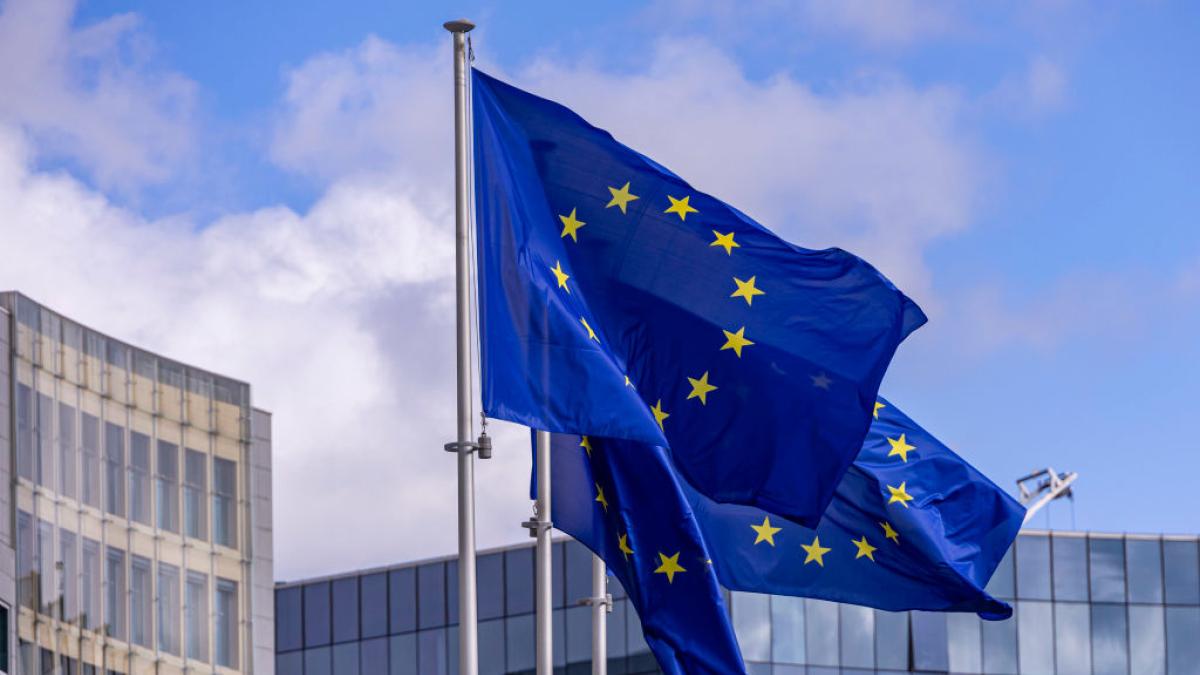
2026 is a regulatory milestone for honey labelling: Directive (EU) 2024/1438 applies from 14 June 2026 – blends must show each country of origin with its percentage (5% tolerance per origin), and the Commission gains powers to set criteria for verifying floral and geographic origin. Buyers should expect updated supplier declarations and stronger authenticity controls in procurement documentation.
Certifications
Frequently Asked Questions
What are the EU legal requirements for honey composition?
Honey sold in the EU must meet the composition criteria of Council Directive 2001/110/EC (Annex II): moisture not more than 20%, fructose and glucose at least 60 g/100g for blossom honey, sucrose not more than 5 g/100g in general, HMF not more than 40 mg/kg and diastase activity at least 8 on the Schade scale. Nothing may be added to honey, including additives or other ingredients.
How must honey origin be labelled in the EU from June 2026?
From 14 June 2026, Directive (EU) 2024/1438 requires the country or countries of origin to be listed in descending order with the percentage of each origin for blends, with a 5% tolerance per origin. For blends with more than four countries of origin, Member States may allow percentages for only the four largest parts, provided they represent more than 50% of the total.
What documents should an EU importer request before buying bulk honey?
Request a batch analysis certificate (moisture, HMF, diastase, pollen profile), origin documentation matching the label declaration, and confirmation that the product meets the Directive 2001/110/EC definitions. For filtered honey, bulk documents must state the full product name.
What is the HS code for natural honey?
Natural honey is classified under HS heading 0409 (EU Combined Nomenclature code 0409 00 00). Use this code for customs declarations and trade statistics; verify any national subdivision with your customs broker.
Popular Questions
- Are frozen vegetables less nutritious than fresh ones?Not straightforwardly, and the comparison depends almost entirely on what the fresh comparator is. Freezing itself preserves nutrients well. Once the…
- Are hemp seeds legal to import into the EU as food?Hulled hemp seed is an established food, but tetrahydrocannabinol levels and the novel food position of extracts both need checking for the destinatio…
- Are sulphites allowed in organic dried fruit?The permitted uses of sulphur dioxide and sulphites in organic production are narrower than in conventional production. Organic processing may only us…
- Are wild mushrooms a novel food in the EU?Whole fruiting bodies of long-consumed species are not. Mycelium from fermentation, extracts and concentrated fractions can be, and the operator carri…
- BRCGS or IFS Food: which certification should a supplier hold?Both are GFSI-recognised, so for most buyers either is acceptable. The choice follows the customer base rather than the standard.
- Can a minimum order quantity be negotiated?Often, but not by asking for a smaller number. An MOQ usually reflects a production run, a packaging order or a full load, and it moves when one of th…
Related Knowledge
- Aflatoxin Management in Tree Nuts: Sorting, Sampling and What the Certificate Proves
- Allergen Management in Mixed Facilities: Nuts, Soy, Sesame and Gluten Under One Roof
- Aseptic Fruit Puree: The Process, the Specification and the Failure Modes
- Berry Grade Classification: How Frozen Berry Grades Are Actually Built
Quick Facts
- Season / availabilityYear-round; packed and shipped throughout the year after seasonal harvest
- Main originsUkraine (principal floral types: sunflower, linden, acacia, wildflower)
- Shelf lifePer supplier TDS (typical commercial range 18-24 months)
- HS codes0409.00
On this page
Key Standards
Products in this category
-
Wildflower (Polyfloral) Honey
Bulk wildflower and polyfloral honey from Ukraine. Why ‘wildflower’ is a trade description and not a botanical guarantee,…
-
Rapeseed Honey
Bulk rapeseed honey from Ukraine. Why it sets within weeks, why that makes it the preferred base for…
-
Honeydew (Forest) Honey
Ukrainian honeydew and forest honey in bulk. What honeydew actually is, why electrical conductivity is the defining analytical…
-
Sunflower Honey
Bulk sunflower honey from Ukraine. The fast crystallisation that defines how it has to be handled, creaming as…
-
Linden Honey
Bulk linden honey from Ukraine. The aroma that defines the grade, why honeydew contamination shows up in conductivity,…
-
Buckwheat Honey
Bulk buckwheat honey from Ukraine. Why the colour and conductivity are high, what the antioxidant claim can and…
-
Acacia Honey
Acacia honey. HMF, diastase number, moisture, pollen analysis, authenticity testing and what a buyer should check at intake.
-
Acacia Honey
Bulk and packed acacia honey from Ukraine. Colour grading in Pfund millimetres, the sucrose allowance that applies to…