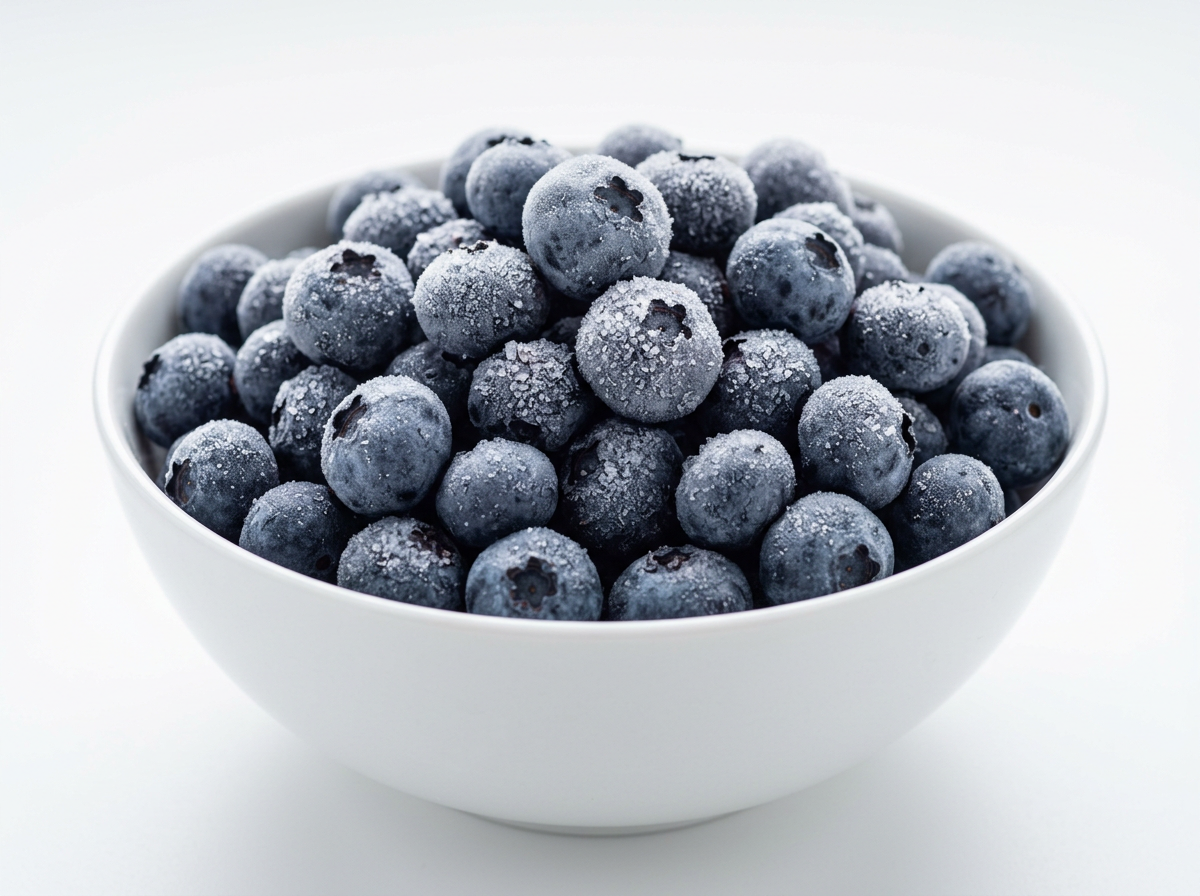
Ukraine freezes berries at scale because the raw material is there: raspberry, blackcurrant, sour cherry, strawberry, blueberry and blackberry all grow commercially, and the processing capacity sits close to the growing regions. For an EU buyer, that proximity is the point – a short road leg means fewer handovers, and fewer handovers means fewer places for the cold chain to break.
This page is the entry point for the whole frozen berry cluster. Below you will find the product specifications; this section explains how to read them.
What decides quality before you ever see the fruit
Three things happen before a berry reaches your specification, and all three are worth asking about.
The harvest-to-freeze interval comes first. Berries lose quality by the hour after picking, and no freezing process recovers what was lost in a warm field trailer. Ask for the interval, not for a nutrient claim.
The freezing method comes second. IQF keeps pieces separate and forms small ice crystals; block freezing is cheaper and suits fruit that will be pressed or pureed anyway. The full comparison is in IQF vs block frozen berries, and the process itself is explained in IQF freezing explained.
The grade comes third, and it is the parameter buyers most often get wrong. Grade is a commercial convention, not a legal definition, so two offers labelled Grade A can differ genuinely. Read frozen berry grades explained before comparing prices.
Writing a specification that can be tested
A frozen berry specification does three separate jobs, and merging them produces a document nobody can enforce:
- Composition. Species, form, Brix where the application is taste-sensitive, acidity for sour cherry and blackcurrant, glaze percentage if the fruit is glazed.
- Appearance. Calibre range, whole fruit percentage, broken fraction, foreign vegetable matter, colour reference – each with a tolerance, a sampling plan and a thawing protocol.
- Safety. Microbiological criteria under Regulation (EC) No 2073/2005 as amended, pesticide residues under Regulation (EC) No 396/2005, contaminants under the EU framework.
The parameter-by-parameter version is in frozen berry specifications.
Cold chain, from tunnel to your intake bay
Storage and transport run at -18 degrees Celsius or colder as a continuous product temperature. Freezing itself happens much colder, at -35 to -40 degrees Celsius in the tunnel, but that is a process condition and does not belong in a transport clause.
The chain rarely breaks inside a running reefer. It breaks at handovers: the dock, the cross-dock, the border, the intake bay. Four records make a frozen consignment defensible – a pre-cooling record, product core temperature at loading, a continuous log placed in the load, and product core temperature at intake. Everything else is commentary. See cold chain logistics and cold chain management for frozen exports.
Certification and documentation
Most EU buyers require a GFSI-benchmarked food safety certification at the processing site – in practice BRCGS, IFS Food or FSSC 22000. Verify the certificate in the scheme’s own directory and read the scope statement: a certificate covering a different site or a different product category does nothing for you.
Organic supply adds Regulation (EU) 2018/848 and the transaction certificate issued through TRACES NT. Our organic certification page covers the control body relationship and the document flow.
How to work with us
Vorezan is a knowledge and sourcing platform, not a broker or a guarantor. We publish the specifications, the standards and the route information so that you can evaluate an offer before you spend a season on it. When you are ready to move, send the specification you want quoted – a written specification always produces a better and faster answer than a product name.