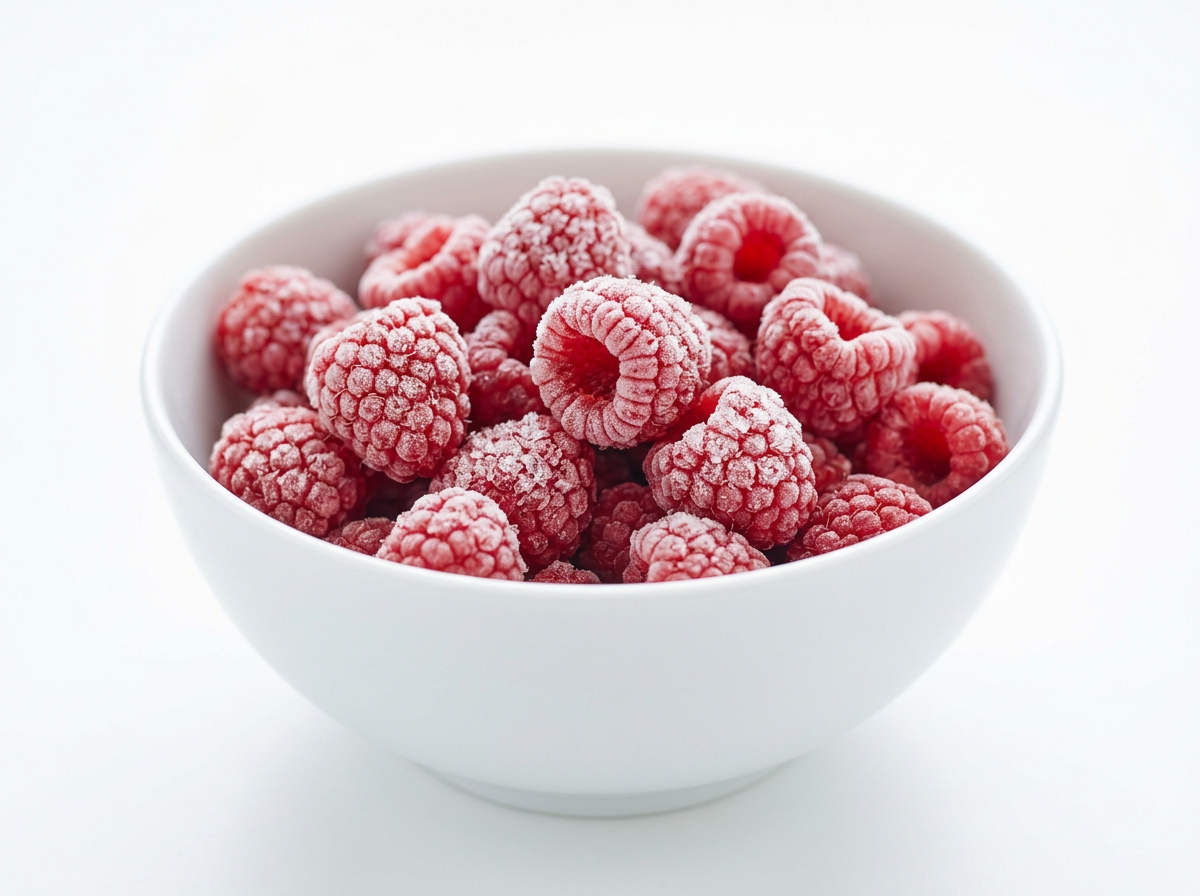
For most berries, roughly eight to twelve kilograms of fresh or frozen input yields one kilogram of freeze dried output. The ratio is set almost entirely by the water content of the fruit: a berry that is around ninety percent water leaves about ten percent of its mass behind once the water is removed.
Why it works this way
Freeze drying removes water by sublimation under vacuum rather than by evaporation, but the arithmetic of yield is the same as for any drying method. What differs is that freeze drying removes more of the water and removes it without shrinking the structure, which is why the piece looks the same size and weighs almost nothing.
Berries sit at the high water end of the range. Raspberry and strawberry commonly land near a ten to one ratio; a denser fruit with more solids will yield better. Losses on the line, trimming and fines add a few percent on top of the theoretical figure.
What follows in practice
The ratio explains the price. When you see freeze dried fruit quoted at eight to twelve times the frozen price before any processing margin, that is the raw material arithmetic rather than a premium. Add the energy and cycle time of the dryer and the gap widens further.
It also explains the packaging. A kilogram of freeze dried berries occupies a large volume of very hygroscopic material, so barrier packaging is not optional. Frozen against freeze dried berries sets out where each form belongs.