Markets
Markets
Country and regional profiles: demand, import requirements, standards, logistics and seasonality for agricultural products.
- Demand profiles
- Import requirements
- Logistics context
Browse by Region
Regional groupings help compare neighbouring markets side by side.
Regions
Each region groups the markets that share trade rules, logistics corridors and buyer expectations.
All Markets
-
Austria
Austria buys modest volumes at high specification, and it functions as a gateway into southern Germany, Switzerland and the wider…
-
Czechia
Czechia buys Ukrainian fruit mainly as an industrial input for further processing and re-export. Price sensitivity is real, but so…
-
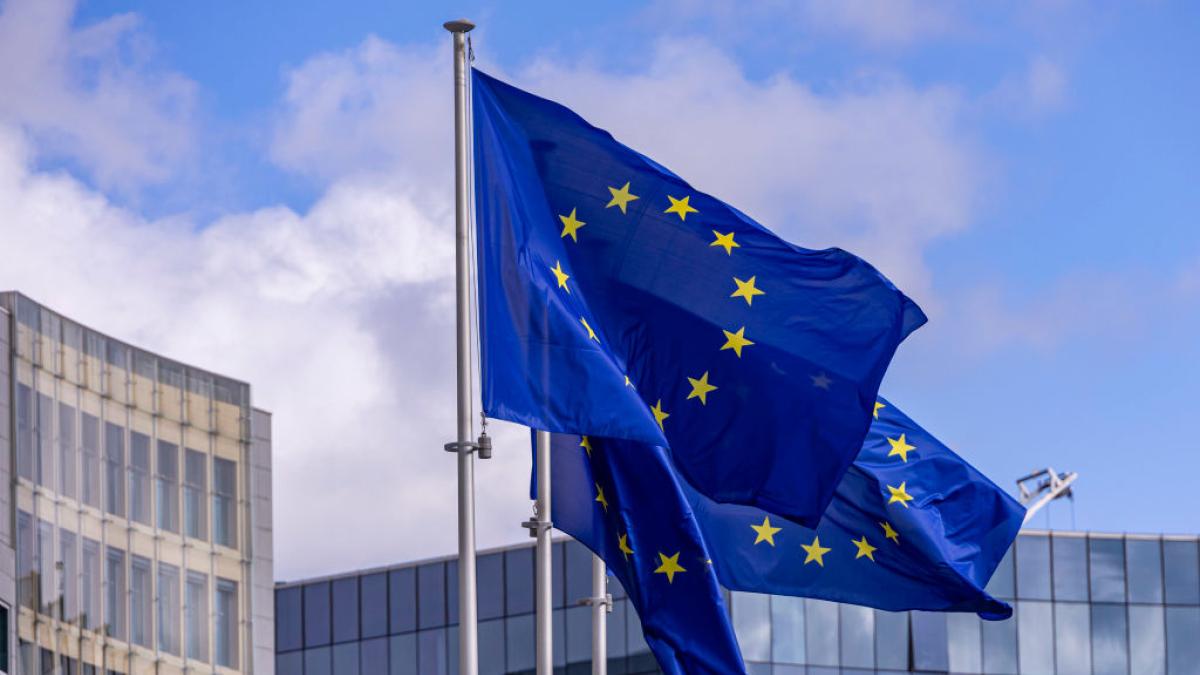
European Union
The Union as a single regulatory destination: the rules that apply everywhere, the entry procedure, and what still differs country…
-
European Union
The Union as a single regulatory destination: the rules that apply everywhere, the entry procedure, and what still differs country…
-
France
France as a destination for Ukrainian frozen vegetables and fruit: buyer segments, specification culture, documentation, corridor and calendar.
-
France
France as a destination for Ukrainian frozen vegetables and fruit: buyer segments, specification culture, documentation, corridor and calendar.
-
Germany
Germany as a destination for Ukrainian frozen fruit, frozen vegetables and agricultural commodities: buyer segments, documentation expectations, corridor and calendar.
-
Germany
Germany as a destination for Ukrainian frozen fruit, frozen vegetables and agricultural commodities: buyer segments, documentation expectations, corridor and calendar.
-
Netherlands
The Netherlands as a redistribution market for Ukrainian frozen produce: trade structure, documentation expectations, corridor and calendar.
-
Netherlands
The Netherlands as a redistribution market for Ukrainian frozen produce: trade structure, documentation expectations, corridor and calendar.
-
Poland
Poland as both the nearest large buyer and the main transit country for Ukrainian frozen produce: buyer segments, requirements, corridor…
-
Poland
Poland as both the nearest large buyer and the main transit country for Ukrainian frozen produce: buyer segments, requirements, corridor…
How to read a market page
A market page describes what a buyer in that country requires beyond what European Union law already requires of everyone. That distinction is the whole point of the page. EU-wide rules on contaminants, residues, hygiene and labelling apply identically in every member state, and repeating them country by country would be padding that hides the part you actually need.
What genuinely differs between countries
Commercial practice differs, and it differs in ways that decide whether a listing happens. Which certification scheme the retail chains treat as a condition of listing rather than a nice-to-have. Which language the consumer-facing label must use and who is responsible for producing it. Which pallet and carton conventions the distribution centres expect, down to the label position on the pallet. Which payment and documentary terms are normal for a first order. And which corridor the goods realistically travel on, which sets both the transit time and the cost of a failed delivery window.
Entry documentation and controls
Each page names the documentation that travels with the consignment and the controls that apply on arrival. Where a control is risk-based rather than automatic – increased-frequency checks on particular commodities under the official controls framework, for instance – the page says that the list is amended periodically and points at the source rather than reproducing a snapshot that will be stale within months.
Why there are no market size figures
Demand descriptions here are qualitative and deliberately so. Credible market size and price series sit behind subscription databases that we are not licensed to redistribute, and the freely circulating figures are usually old, circular, or both. A page that told you a market was worth a specific number of euros would be less useful than one that tells you which certificate the buyer will ask for.
Read the market page with the route page
The market page tells you what the buyer wants. The route page tells you how the goods get there and what the journey does to the specification. Reading one without the other is how delivery promises get made that the corridor cannot support.
Start here
Three entry points that answer most first visits to this section.
Germany, frozen berries
Buyer segments, requirements above EU law, entry documentation and the road corridor.
Importing into the EU
The end-to-end import sequence: documents, controls, customs and receiving.
Certification schemes
Which scheme a given retail customer is likely to require, and what it covers.
Common questions about this section
Is a GFSI-recognised certificate legally required to sell into the EU?
No. It is a commercial requirement imposed by buyers, not a legal one. In practice most retail and industrial buyers treat a certificate covering the exact site and product category as a condition of listing.
Do I need a separate label for each member state?
Labelling content is harmonised under Regulation (EU) 1169/2011, but the mandatory particulars must appear in a language easily understood in the member state of marketing. In practice that means country-specific artwork or a multilingual label.
Which market should a first-time exporter target?
The one where you already have a buyer. Beyond that, the practical filter is which certification you hold, because that decides which retail chains can list you at all.
Why do the pages not rank the markets by opportunity?
Because the ranking depends on your product, your certification, your volume and your delivery capability. A generic ranking would be a guess dressed as advice.