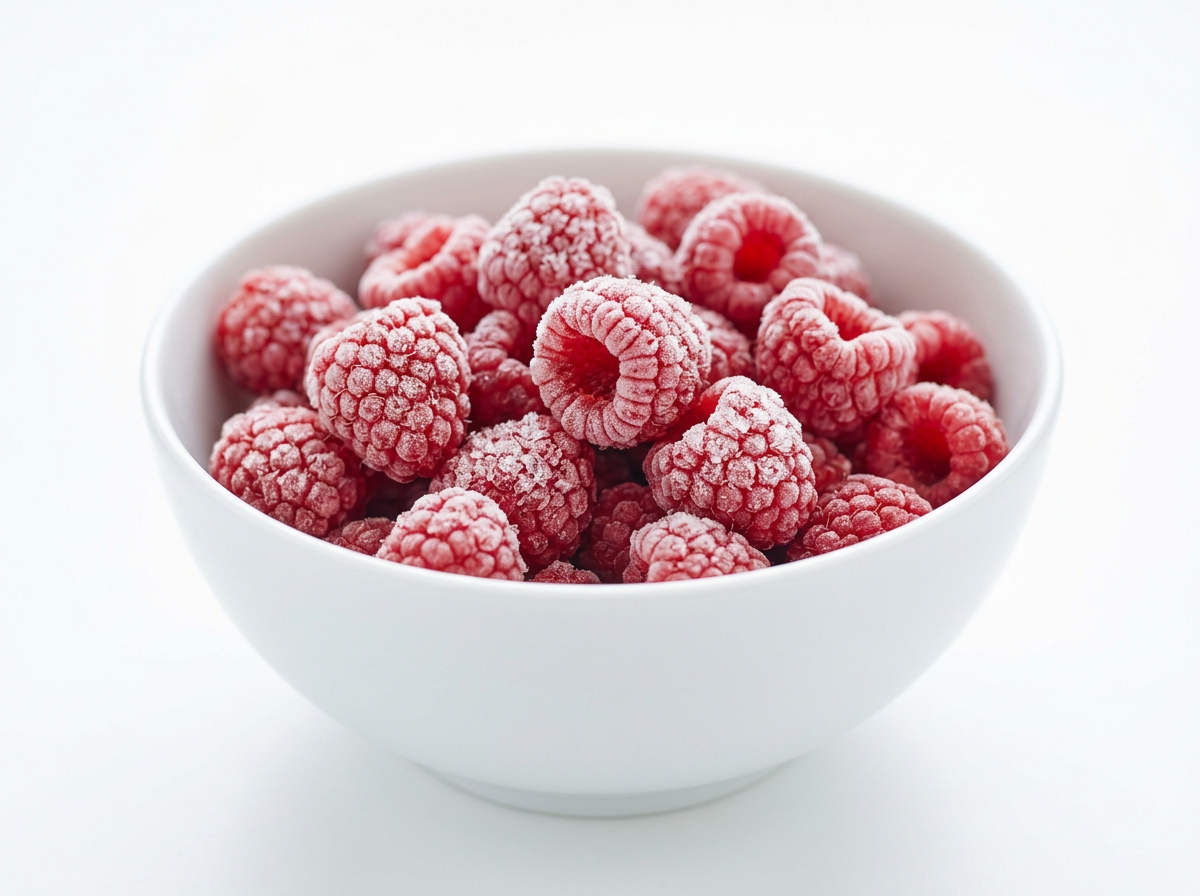
Choose Serbia when colour and firmness for a visible whole-fruit application matter most and you are buying into an established, heavily traded market. Choose Poland when you want EU-origin fruit with the shortest documentary route and a late-season window. Choose Ukraine when you want competitive pricing on processing-grade fruit with a short road corridor into central Europe and are prepared to run a full supplier approval.
None of the three is a substitute for the others in a tight specification, because the variety mix differs and variety decides colour, firmness, size and the acid to sugar balance more than country does. What follows compares them on the criteria that actually appear in a purchase decision.
| Criterion | Ukraine | Poland | Serbia |
|---|---|---|---|
| Dominant variety type | Mixed: summer-fruiting and autumn-fruiting plantings, with Polana, Polka, Heritage and Willamette all present | Predominantly autumn-fruiting processing varieties, Polana and Polka among them | Predominantly Willamette, with Meeker and others in newer plantings |
| Main harvest window | Summer crop from around late June, autumn crop into September and October | Late summer into autumn, with the primary processing volume in the later window | Concentrated summer harvest, typically from around late June into July |
| Fruit size | Variable by variety and planting; autumn varieties tend to larger, softer fruit | Larger fruit typical of the autumn-fruiting varieties | Medium, firm, uniform – the classic Willamette profile |
| Colour | Variety dependent, ranging from bright to deep red | Generally bright to medium red | Deep, dark red, which is why it is favoured where colour carries the product |
| Acid to sugar balance | Variable; autumn-fruiting fruit tends to lower acidity late in the season | Moderate acidity, typical processing profile | Higher acidity relative to sugar, giving the pronounced raspberry character puree buyers look for |
| Typical grades offered | Whole IQF grade A and B, crumble, puree-grade block | Whole IQF, crumble, block for puree and juice | Whole IQF rolend and grade A, crumble, block |
| EU origin status | Third country; import formalities apply | EU origin; intra-Union movement | Third country with a preferential arrangement in place; import formalities apply |
| Certification availability | GLOBALG.A.P. and GRASP present at the larger operations; IFS or BRCGS at export-oriented plants | Widely available across the processing base | Widely available at the established export plants |
| Road lead time to central EU | Short – roughly two to five days depending on destination | Shortest, and domestic within the EU | Longer than Poland, comparable to or longer than Ukraine depending on destination |
| Typical MOQ pattern | Full truck for best pricing; part loads possible through groupage | Full truck standard; part loads readily available | Full truck standard |
| Price position | Generally the most competitive of the three on processing grades, and it moves with the crop | Mid, with EU origin priced into it | Set by the Serbian crop, which is the reference price much of Europe watches |
Every figure in that table is a shape rather than a guarantee. Crop size, frost events, labour availability and currency all move price and availability within a season, and a raspberry price quoted out of season is a forecast.
When to choose Serbian raspberry
Choose Serbia when the finished product shows the fruit and the colour is doing the selling. The Willamette profile – firm, medium-sized, deep red, high in acidity – is the reason Serbian raspberry became the European reference for whole IQF fruit and for puree where a strong raspberry character is wanted. In a yoghurt swirl, a coulis or a premium puree, that acidity and colour are the specification.
Choose Serbia when you want a deep, liquid market. Serbia’s raspberry sector is large, long-established and heavily traded, which means quoted prices, known plants, established quality conventions such as the rolend grade, and a wide base of buyers and sellers. For a buyer who wants comparables and does not want to develop a supplier from scratch, that depth has real value.
Choose Serbia when your programme sits in the summer window and you want fruit from a single concentrated harvest. The season is short and intense, which produces homogeneous lots within a crop year.
The trade-offs to weigh: Serbian pricing is the price the whole market watches, so it is rarely the cheapest, and in a short crop year it can move sharply. It is also a third-country origin, so customs clearance and the same third-country documentary chain apply as for Ukraine.
When to choose Polish raspberry
Choose Poland when EU origin simplifies your file. Fruit produced and frozen in Poland moves as an intra-Union consignment, which removes the border control step, the customs declaration and the third-country documentary chain from your process. For a buyer with limited import capability, that alone can decide it.
Choose Poland for the late window. The autumn-fruiting varieties that dominate Polish processing plantings extend the calendar past the classic summer harvest, which is useful for a programme that needs deliveries when the summer origins are already committed.
Choose Poland when the fruit is going into a process and larger, softer fruit is acceptable or preferable. Autumn-fruiting varieties generally give a larger berry with a softer structure, which is well suited to puree, juice and filling applications and less suited to a premium whole-fruit topping.
Choose Poland when short transit and easy part-load logistics matter. Polish cold stores serve the whole EU and groupage options are plentiful, so a buyer who cannot take a full truck has a straightforward route. Full loads against groupage covers the economics.
The trade-offs: Polish raspberry is not usually the cheapest option, the domestic crop competes with imports for the same processing capacity, and the varietal profile does not match a Willamette specification.
When to choose Ukrainian raspberry
Choose Ukraine when a competitive price on processing-grade fruit is the objective and you are prepared to do the approval work. The Ukrainian berry base has expanded significantly and it competes on cost, particularly on crumble, block and second-grade IQF destined for puree, juice, jam and filling applications.
Choose Ukraine when the corridor suits you. Road reefer from western Ukraine into Poland, Germany or Romania is short, and for central European destinations the lead time is competitive with any origin. The cold chain guide sets out what the route requires.
Choose Ukraine when you want a mixed varietal offer. Because plantings include both summer-fruiting and autumn-fruiting types, a buyer working with several specifications can often cover more of them from one origin, and the extended calendar helps a programme that runs across the season.
Choose Ukraine when you are willing to build the relationship. The base includes excellent operations and less developed ones, and the difference between them is visible in a supplier approval pack long before it is visible in a sample. Certification depth varies more than in Poland or Serbia, so verify the scheme, the scope and the validity rather than assuming.
What changes in your process
- Documentation. Polish fruit is an intra-Union movement. Ukrainian and Serbian fruit are third-country imports with the associated customs and official control steps, and the file has to be complete before arrival rather than assembled afterwards.
- Approval effort. A new origin means a new supplier approval cycle: questionnaire, certificates, specification agreement, sample approval, first-load inspection. Budget a season for it rather than a purchase order.
- Specification rewriting. A Willamette specification applied to autumn-fruiting fruit will generate non-conformities that are varietal rather than quality failures. Write the specification around the variety you are buying, and state the variety.
- Season planning. A single-origin programme inherits that origin’s harvest calendar and its frost risk. Two origins with different windows is the standard answer, and it is worth the extra approval work.
- Price basis. Compare on the same Incoterm and the same grade. A Serbian price ex works and a Ukrainian price delivered are not comparable numbers, and the Incoterms entry explains what each one includes.
What the table does not show
Variety beats origin. Two plants in the same country working with different varieties produce different fruit. If your specification depends on colour, firmness or acidity, name the variety in the specification and verify it, rather than relying on origin as a proxy.
The plant matters more than the country. Freezing technology, sorting capability, the optical sorter, the metal detection and the cold store discipline vary far more between individual plants than between these three countries. An origin decision that is not also a plant decision is half a decision.
Prices are a moving crop story. Raspberry pricing is driven by crop size, frost events at flowering, labour availability at picking and stock carried over from the previous year. It also moves with currency. Any price range in a guide is out of date by the next harvest; ask for a current offer against a defined grade, quantity and delivery term.
Certification availability is not certification. All three origins can supply certified fruit. Whether the specific supplier holds a current certificate with the right scope is a question about that supplier, and the answer is on the certificate rather than in the country. Understanding food safety standards sets out the checks.
Grade vocabulary is not fully standardised. Terms such as rolend, grade A, grade B and crumble are trade conventions and their exact meaning varies between plants and markets. Two offers described identically can be different products, which is why the numbers – calibre, defect tolerances, Brix, extraneous vegetable matter, microbiological criteria – belong in the contract. The product specification entry covers what to write down.
FAQ
Which origin is cheapest?
Ukraine is generally the most competitive on processing grades, but the ranking is not fixed. A short Serbian crop lifts the whole market; a large Polish crop softens it. The reliable approach is to price the same grade, quantity and Incoterm from all three in the same week rather than to carry an assumption from last season.
Can I mix origins in one specification?
Yes, if the specification is written on measurable parameters rather than on origin, and if the application tolerates the varietal differences. A puree programme usually can. A premium whole-fruit retail pack usually cannot, because colour and calibre differences will be visible in the pack.
What is rolend grade?
It is a trade term used mainly in the Serbian and wider Balkan raspberry trade for whole IQF fruit selected for appearance and integrity, and it sits above the general grade A designation in most usages. Because it is trade convention rather than a defined standard, it should be backed by written tolerances in the contract rather than relied on as a name.
How far ahead do I need to book?
For the summer window, serious buyers contract before or during the harvest, because the volume of a short concentrated crop is committed quickly. For autumn-fruiting fruit there is more flexibility. Spot availability exists in all three origins but it is the residue of the crop, not the pick of it, and the grade mix reflects that.
Do I need a different Incoterm for each origin?
Not necessarily, but the practical choice differs. Intra-Union movements from Poland make delivered terms straightforward. Third-country origins raise the question of who handles the import formalities and who carries the temperature risk across the border, which is exactly what the FCA, CPT and DAP comparison is about.