A frozen cold chain is not a temperature; it is a chain of custody with a temperature attached. Most losses in frozen cold chain logistics do not happen inside a running reefer – they happen at handovers, where nobody is measuring and everybody assumes someone else is. This guide sets out the controls that survive a commercial dispute.
The regime
The working standard for frozen fruit and vegetables is -18 degrees Celsius or colder, held continuously. Two clarifications matter in contracts:
- -18 is a product temperature, not an air temperature. A trailer set point of -18 does not prove the pallet core was -18 on loading.
- Brief excursions during handling are normal. Pretending otherwise produces contracts that everyone breaches. Define the tolerated excursion – magnitude and duration – and the evidence that settles it.
Freezing itself happens far colder: a blast or fluidised bed tunnel runs at -35 to -40 degrees Celsius. That is a process condition, not a storage condition, and it does not belong in a transport clause.
Map the chain before you control it
Write down every point where the product changes hands or changes environment:
- Tunnel exit to cold store intake at the factory.
- Cold store to loading bay.
- Loading bay to reefer.
- Border crossing and any customs inspection.
- Any cross-dock or groupage transfer.
- Reefer to destination cold store.
- Destination store to your production line or to onward distribution.
Each of those is a handover. For each one, name the responsible party, the measurement taken, and the record produced. A chain with seven handovers and three records has four blind spots, and they are where the arguments happen.
Monitoring that is worth having
| Control | Practical form | What it proves |
|---|---|---|
| Product core temperature at loading | Probe between cartons, recorded on the loading document | The goods left cold |
| Continuous transport log | Data logger in the load, plus the reefer unit download | Nothing happened in transit |
| Pre-cooling record | Trailer pre-cooled before loading, recorded | The load did not warm on the first hour |
| Door-open events | Reefer telematics where available | Where the excursion happened |
| Intake check | Core temperature at unloading, before acceptance | The goods arrived cold |
Two independent records beat one authoritative record. A reefer unit log records return air, which is not product temperature; an in-load logger records local conditions, which may not represent the pallet core. Together they usually tell a coherent story. Separately, each is arguable.
Agree in the contract which record prevails, and who downloads it. This single clause resolves most temperature disputes before they start.
Handling a deviation
- Do not unload into your own store first. Once the goods are mixed into your inventory, the evidence is gone.
- Record the arrival state. Photographs of the load, the seal, the logger position and the frost condition inside a carton.
- Take product core temperatures in at least three positions: door end, middle, front, top and bottom of the stack.
- Download both logs before releasing the vehicle.
- Quarantine, do not reject on the spot, unless the deviation is unambiguous. Rejection has commercial consequences that quarantine does not.
- Assess safety and quality separately. A brief rise to -12 degrees Celsius is rarely a food safety event for a frozen product; it can still be a quality event through recrystallisation and drip loss.
- Notify within the contractual window. Most claims fail on notification timing, not on the facts.
What temperature abuse actually does
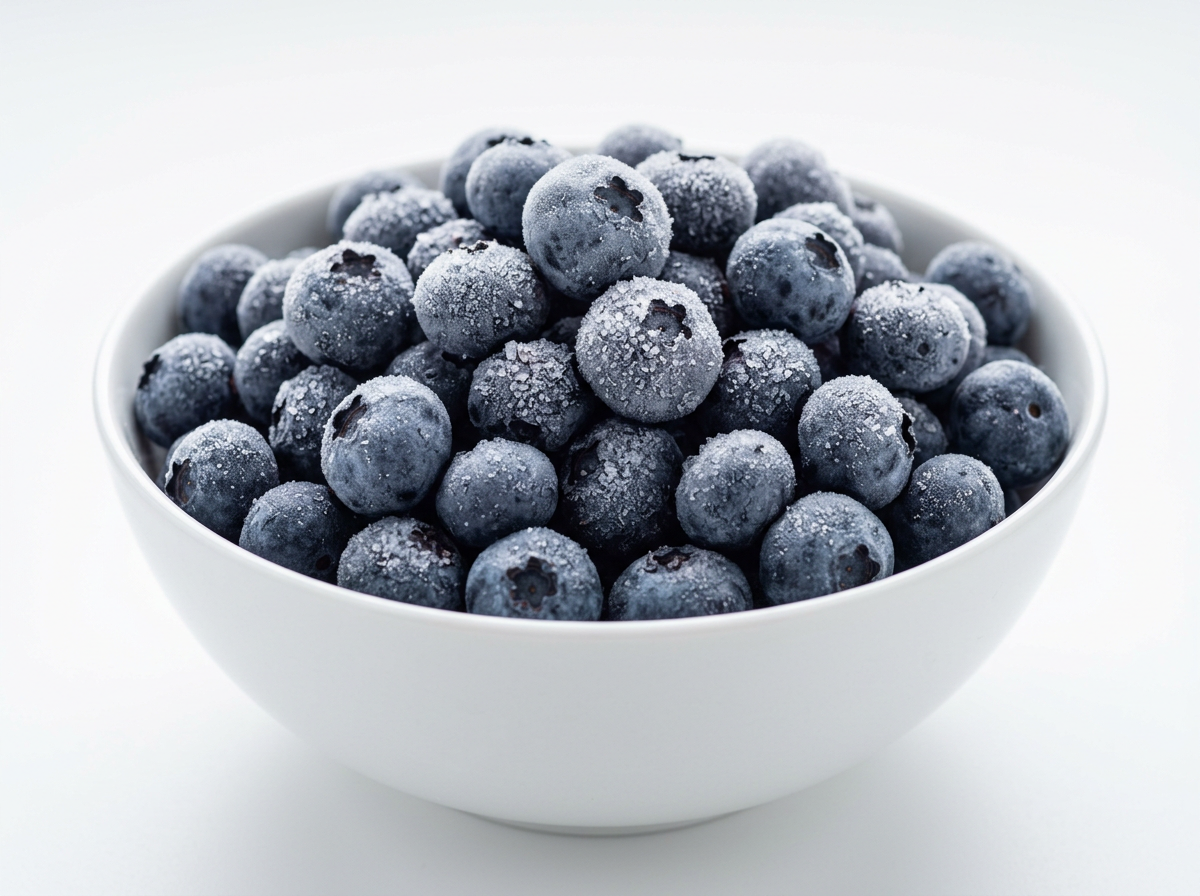
Frozen fruit does not spoil at -12 degrees Celsius the way chilled fruit spoils at 8 degrees Celsius. The damage is physical. Each partial thaw and refreeze lets small ice crystals merge into larger ones – recrystallisation – which ruptures more cell walls. The visible result on arrival is clumping, ice sheets inside the liner, and soft fruit with high drip loss after thawing.
That is why the frost pattern inside a carton is diagnostic. Loose dry clumps suggest a packing-line problem. Ice sheets and frost on the inside of the liner suggest the product warmed and refroze.
Common mistakes
- Setting the reefer to -18 and treating that as compliance. Set point is an instruction, not a measurement.
- Loading warm product into a cold trailer. A transport unit maintains temperature; it does not freeze.
- No pre-cooling record. The first hour is where the biggest gain happens.
- Single logger at the door. The door end is the worst position and the most disputable.
- Accepting the goods, then claiming. Acceptance without reservation weakens the claim considerably.
A practical example
A consignment on a road route to Western Europe arrived with a clean reefer download and clear frost inside the liners. The in-load logger showed a six-hour plateau at -9 degrees Celsius on the first day. Reconstruction showed the trailer had not been pre-cooled and the pallets had been staged on an ambient dock for two hours before loading. The reefer log looked fine because the unit was recording return air, which recovered quickly; the pallet cores did not. Adding a pre-cooling record and a dock dwell limit to the loading procedure removed the recurrence.
FAQ
What temperature should frozen berries be transported at?
-18 degrees Celsius or colder as product temperature, with any tolerated excursion defined explicitly in the contract.
Is a temperature deviation always a food safety problem?
For frozen fruit, usually not on its own – it is more often a quality problem. Assess it against your HACCP plan rather than by rule of thumb, and document the assessment.
Who owns the risk during a border delay?
Whoever holds risk under the agreed Incoterms 2020 rule at that point in the journey. This is exactly why naming the precise delivery point matters more than the three-letter code.
How long can a reefer hold temperature if the unit fails?
Longer than most people expect for a full, well-insulated load, and much less for a part load with air gaps. Do not plan around it; plan around the response time to a failure alarm.